Edmonia Lewis Quotes
I have a strong sympathy for all women who have struggled and suffered.
Bullard, Laura Curtis. "Edmonia Lewis." The Revolution, vol. 7, no. 16, 20 Apr. 1871, p. 4.


The decree prevents a married woman from obtaining a passport without her husbands written approval. The reference to criminals is because the Egyptian Constitution and the United Nations Declaration of Human Rights provides the right of any Egyptian to travel or leave the country except for criminals who have been properly adjudicated.


The universality of the fundamentalist extremists desire to control women is a fascinating observation that appears not to have been made before.


In one of the earliest claims that women should be allowed to preach, she made a theological argument and then challenged the male theologians to better her arguments. Although she was very demur, intellectually and theologically she “took it right at them.” Such intellectual aggression by women was virtually unheard of.

This is the earliest surviving attempt of the Romans to formulate a legal code.


First female presidential candidate & first divorcee to run for that office

The Bible and the Church have been the greatest stumbling blocks in the way of women’s emancipation.
The most important documents and doctrine of most churches were created by men who also established the framework of the religion. The result has in almost all cases been a sexist structure with women having not only little power not typically females are banned from all church governance. See {640303} for her quote on religion in general vis a vis women.

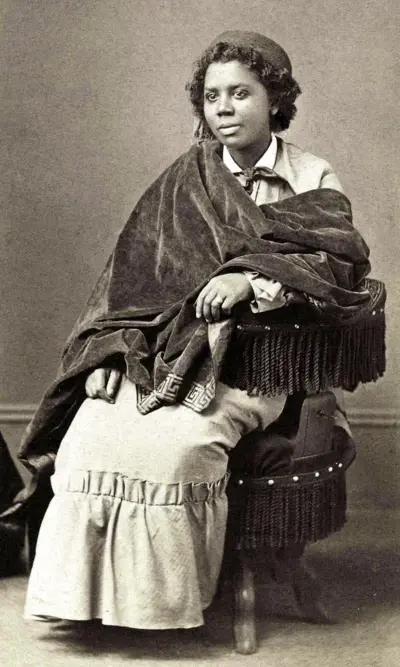
Mary Edmonia Lewis, "Wildfire", was an American sculptor, of mixed African American and Native American (Ojibwe) heritage. Born free in Upstate New York, she worked for most of her career in Rome, Italy. She was the first African-American sculptor to achieve national and then international prominence. She began to gain prominence in the United States during the Civil War; at the end of the 19th century, she remained the only Black woman artist who had participated in and been recognized to any extent by the American artistic mainstream. In 2002, the scholar Molefi Kete Asante named Edmonia Lewis on his list of 100 Greatest African Americans.
