Michael F. Easley Quotes
I had hoped to let the one-half cent sales tax sunset this year, but we do not believe revenues will grow as fast as we hoped for the rest of the year.
Easley, Michael F. "Statement on the State Budget." 2003. Messages, Addresses, and Public Papers of North Carolina Governor Michael F. Easley, Volume I, 2001-2005, edited by William H. Brown, N.C. Office of Archives and History, 2009.


This quotation was very important because the most important economic principle of Republican ideology since the 1960s has been that tax cuts will produce economic growth and the converse: that tax increases will stifle economic growth. For 50 years the Republican nostrum for all economic problems has been to increase growth by cutting taxes and opposing all tax increases. However Leonhardt studied the data and results since 1987 and found that the Republican doctrine had been wrong. Economic growth plummeted when we had the largest tax cuts in the George W. Bush years and the greatest growth spurts were following the 1990 George W. Bush tax increase and the 1993 Bill Clinton tax cuts. When the data became public some Republicans took the view that taxes were just one of the factors determining economic growth and have been overwhelmed by other factors. Some Democrats argue that if this were really believed by Republicans, they would have favored these other factors more so than tax cuts when in fact tax cuts are always their nostrum.


This was a typical argument in the 2012 battle between President Obama and the Republican conservatives. However, this was written 35 years earlier, when the exact same issue was polarizing politicians. The idea for taxing the rich more to reduce the deficit has been around since there was a Federal deficit. On most occasions the rich had enough political clout to avoid additional taxes for them and get the general public to pay instead of them. However, there have been times where they have not been able to avoid increased taxes. The New Deal lead by Franklin Delano Roosevelt and the Obama administration in 2013 were two such exceptions.


This is the most articulate historical statement of the modern conservative mantra regarding taxes. However, one change has taken place. The words “necessarily” and “often” tend to be left out of the more modern ideological statements. Mellon’s original statement has never really had any politicians or economists who disagreed. Politicians of all economic persuasions have generally accepted the Mellon statement but the extreme conservatives’ creed is that a lowering of taxes always produces more revenue and a tax increase will inevitably lead to greater tax revenue—a position which Mellon never took. Mellon however was very solicitous of the wealthy, felt the welfare of the nation depended on their prosperity, and was a strong advocate of what was later called ‘trickle down’ economics {628592}.
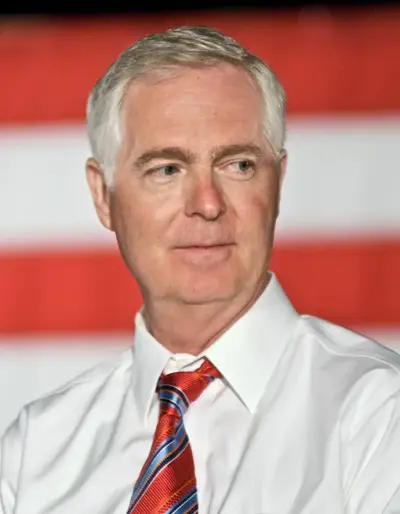
Michael Francis Easley is an American lawyer and politician who served as the 72nd governor of the U.S. state of North Carolina from January 2001 to January 2009. He is the first governor of North Carolina to have been convicted of a felony related to a single campaign finance violation. Subsequently, the Senior Resident Superior Court Judge for Wake County granted Easley a Certificate of Relief related to the case. A member of the Democratic Party, Easley was North Carolina's second Catholic governor.
