Elaine Pagels Quotes
I had been taught that the separation between religion and politics happened in the Enlightenment. But there were people who tried to create a secular relationship to government 2,000 years ago, and those people were the Jews.
Pagels, Elaine. Revelations: Visions, Prophecy, and Politics in the Book of Revelation. Viking, 2012.


Kennedy was being hurt be fears that as a Catholic, he would be beholden to the Pope and the Catholic Bishops. There were many protestants who believed that the Catholic Church was antithetical to democracy and some who even believed that Catholicism was the religion of Satan. Kennedy decided to confront the issue head on.


This quotation is one of the first to make the critical observation that the only time that tolerance of a religion is necessary is when there is an established church and others that deviate from it. If there is no established church, as the Founding Fathers envisioned, there is no preeminent church to do the tolerating. All are equal. In practice, Protestant churches were proportionately dominant in early America and up through the 20th century. So most of the issue of tolerance problems in America were cultural. And there is still a minority of Christians who believe that America should be a Christian country and other religions should be “tolerated.” However, Clinton and most of the founders did not want to see even general Christianity established as the national religion even they it was the majority religion.


This is a remarkable quotation in that it shows us that there was virtual unanimity about the separation of church and state including the various clergy who were in support of it. Yet in the 21st century there was considerable controversy among some fundamentalist groups who sought more religious influence and/or control of government policy and criminal laws.
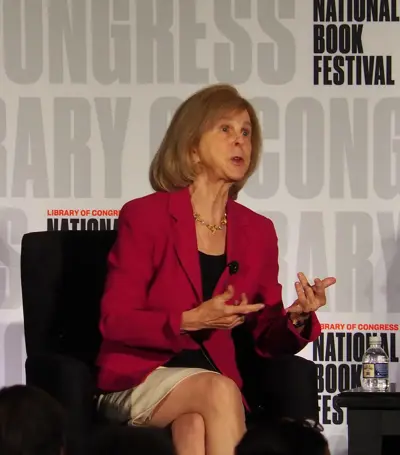
Elaine Pagels, née Hiesey, is an American religious historian. She is the Harrington Spear Paine Professor of Religion at Princeton University. Pagels has conducted extensive research into early Christianity and Gnosticism.
