Vallabhbhai Patel Quotes
I fully appreciate the fears of our brothers from [the Muslim-majority areas]. Nobody likes the division of India and my heart is heavy. But the choice is between one division and many divisions. We must face facts. We cannot give way to emotionalism and sentimentality.... Whether we like it or not, de facto Pakistan already exists in the Punjab and Bengal. Under the circumstances I would prefer a de jure Pakistan, which may make the [Muslim] League more responsible. Freedom is coming. We have 75 to 80 percent of India, which we can make strong with our own genius. The League can develop the rest of the country.
Vallabhbhai Patel, 1875—1950, Home Minister & Deputy Prime Minister India, Address to the All India Congress Committee, June 1947
Sourced by: Eigen's Political and Historical Quotations

He was echoing proposals that he made in the Delhi Emergency Committee that had been called to cope with the butchery and murder when the Hindus and Sikhs were trying to leave the areas that were to be part of Pakistan under the Partition and the retaliations against the Delhi Muslims who were trying to flee to the new Pakistan. Unfortunately, the Muslim leadership did not want such a truce as while the land had been partitioned, Indian Money, military equipment, and other resources were yet to be divided and the Muslim leaders who had been so successful playing the violence card to gain and independent Pakistan, did not want to give up that option in the remainder of the division of India. Also, it was not at all clear that the Muslim political leaders could even then control the mobs who they had already whipped up to violence.

He persuaded many other rulers to join the Indian Union when India became Independent.

Even into the 21st century, the problem was not solved and Muslims from Pakistan continue their futile but tragic terrorist tactics to try and acquire more territory from India." 1st Earl Mountbatten of Burma
The Muslim League was demanding that the Punjab become a part of Pakistan when independence was granted later. However, the Hindus, Sikhs, Buddhists, and Christians were all adamant that they would not live in a Muslim nation which would soon become a de facto theocracy if the British could not control them. The Punjab was divided between India and Pakistan, and hundreds of thousands died in Sikh-Muslim attacks and then Hindu-Muslim conflict in the Punjab.
A 'kirpan' is a type of knife—a weapon—which all male Sikhs are religiously obligated to have in his possession and on his body at all times. Singh was a Sikh Maharaja (King) of an area that had about an equal number of Muslims and Sikhs. The Sikh's had a long history of living under Muslim domination and wanted no part of any more. Patiala was within the Punjab and Jinnah was insisting that the Punjab should be a Province of the new Pakistan because the Punjab was majority Muslim. However, there were many Sikhs, as well as some Hindus, Buddhists, and Christians and virtually none of these wanted to be a part of Pakistan. Further, a significant portion of the Muslim Punjab population also preferred to join India for many reasons, not the least of which was that they had become used to a democracy where they had complete freedom of religion and civil rights as well, and with the exception of Turkey none of the Muslim countries were democratic. Based on the history, actions, inactions, and statements of the Muslim League which did not democratically elect its leaders, Pakistan would not likely be a democracy that guaranteed civil rights—especially religious rights—to their citizens (and they were right). So the majority of the people of the Punjab were opposed to becoming a part of Pakistan. The Sikhs were passionate opponents of being a part of Pakistan as they knew their Muslim neighbors one of whose major reasons for wanting a Muslim state was that everyone could then be forced to be Muslim or be expelled or ethnically cleansed.

Two months earlier, Jinnah and the Muslim League had, behind the scenes, orchestrated and abetted vicious, murderous, terrorist attacks on Sikhs by Muslim tribesman brought into the Punjab for the purpose." Master Tara Singh
This famous quotation, from this important address, at such a critical time in history has been admired for years. Despite his great oratory, the next months were to see almost 2 million Indians of all faiths killed in what was probably the worst internecine violence in human history. Ironically, the politically motivated terrorism had stopped since all the decisions had been made. The motivation for the frightful atrocities that took place from then on was vengeance and fear of more vengeance." 1st Earl Mountbatten of Burma

The throwing of flaming torches to burn out members of the other religion got out of control and the fires spread to the homes of all residents. The fires were so prevalent that the riot was then and has since been referred to as the "Shahalmi Gate Blaze". At the time Jinnah was horrified at the violence, but by the following year he and other Muslim League leaders were aiding and abetting Muslim terrorist attacks to put pressure on the government to create a separate Muslim state upon Indian independence—Pakistan. Most historians agree that the Muslim terrorism in the short run had worked, as it would have been unlikely that India would have been partitioned in the absence of violence. However, it set in motion a cultural pattern of religious hate, bigotry, intolerance, violence and murder which would plague Pakistan thereafter. The politicians throughout the country's history have tried to use the Muslim religious, fundamentalist, extremists for their purposes only to find that the fanatics were out of control and the entire Pakistani population has lived in fear, lest an extremist decide that what they did or say was inimical to Islam and assassinate him or her. They have assassinated even the highest levels of politicians—President, Governors of Provinces, National Legislatures as well as Journalists, writers and academics. But the average Pakistani citizen has always been at risk of brutal murder with hundreds killed every year in an atmosphere of total impunity for the murderers. They have even murdered married women who had been raped on the grounds that they were adulterers and were therefore stoned.

In the negotiations the Indian nationalists of the Congress Party did not get everything that they wanted. Rarely does anyone in legitimate negotiations. This was a masterful example of oratory where Nehru wanted to produce the euphoria and historical gravitas that was appropriate when the largest group of people in world history gained self-government and independence. Yet the Congress Party had made promises in the platforms over the years that had not been kept. The partition of the one nation into a Muslim state as well as India denied the Indians of some of their historically and economically most important territories and he had to acknowledge that failure without dampening the public enthusiasm for the great achievement. This was a masterpiece.

The attitude of the non-Muslims at that time was based on the Muslim attacks in the Punjab on Sikhs where entire Sikh villages and neighborhoods in towns and cities were murdered—every man woman and child. In many cases women were first raped. The Muslims had been whipped up by the leaders of the Muslim League to put terrorist pressure on the Sikh, Hindu and British to meet the League's political and territorial demands for an Independent Pakistan. Soon there was retaliation in kind and there were many Hindus, Sikhs and Muslims engaged in internecine slaughter and behaving "little better than animals".
Singh turned him down. Note that even before Pakistan was a country, Jinnah and other Muslim leaders had hopes of grabbing much of India as the British partitioned it, and have been trying to do so ever since the inception of Pakistan
The Sikh's had a long history of living under Muslim domination and wanted no part of any more. Patiala was within the Punjab and Jinnah was insisting that the Punjab should be a Province of the new Pakistan because the Punjab was majority Muslim. However, there were many Sikhs, as well as some Hindus, Buddhists, and Christians and none of these wanted to be a part of Pakistan. Further, a significant portion of the Muslim Punjab population also would prefer to join India for many reasons, not the least of which was that they had become used to a democracy where they had complete freedom of religion and civil right as well, and with the exception of Turkey none of the Muslim countries were democratic and based on the Muslim League which did not democratically elect its leaders, Pakistan would not likely be a democracy that guaranteed civil rights (and they were right). So the majority of the people of the Punjab were opposed to becoming a part of Pakistan. The Sikhs were passionate opponents of being a part of Pakistan.
At Indian Independence from Britain, people could choose whether they wanted to be citizens of India or the new Muslim state created because many Muslims insisted on living in a country that was majority Muslim. However, and what came as a great shock to the then new Pakistani leadership, the majority of the Muslims of India choose not to become citizens of the new Islamic state and preferred to stay in Hindu dominated India which they knew would be democratic, free, and would protect their right to practice Islam as they saw fit. Many feared that in Pakistan Islamic extremists would dictate the exact form of Islam that Muslims must follow, and that is exactly what happened in Pakistan—not only from government action proscribing religious practice but from the government tolerating and not interfering with Islamic fundamentalist extremist terrorists who often assassinated Muslims whose particular form of worship was offensive to them or people would call for reforms of the protection of human rights.
The Partition was accompanied by over 2 million murdered Indians as India was divided into a smaller India with almost all the Hindus and Sikhs and a slight majority of the Muslims and Pakistan with all Muslims who made that choice. Pakistan has been trying to de stabilize the area ever since to gain control of more land and became a theocracy and military dictatorship—sometimes de facto and sometimes de juro.
As early as 1933, 14 years before Indian independence, there was a movement for a separate Muslim nation within India. Ironically, Hindu India was never a nation in any sense of the word, but was a series of independent principalities much like Italy before its unification. However, with the Muslim conquest of the various Indian states, there was a central authority, ruler, and nation for the first time. Later the Muslims had to argue that India was not a country when it was they who had made it such. When the Muslim Emperors were in power, they argued that India was one country under their authority. But when they lost power, the Muslims argued the other side of the issue.
Muhammad Ali Jinnah and the other Muslim League leaders wanted to stir up India's Muslims in order to prevent Indian Independence from Britain unless India were partitioned and the Muslims could have their own nation. At that point the British and the Congress Party of India—the majority political party were both starting to plan for independence. Jinnah and most of the Muslim nationalists did not want to have Muslims in a Majority Hindu nation. To stop it, they first used fear to try and separate the many Indian Muslims who were politically active from their roles in and loyalty to the Congress Party which although Hindu dominated had Muslim members and officials. All the Muslims who were literate were aware of the terrible revelations of the Nazi Concentration Camps and the attempted extermination of all the Jews of Europe. The "party line" of the Muslim League was that once the British turned the government of India over to the Congress Party, they would turn on the Muslims and exterminate them so that India would be all Hindu. There were no such plans or even suggestions be anyone in the Congress party, the paranoia and the conspiracy theory resonated with many Indian Muslims just as conspiracy theories are believed by some people in every society. In this case, the paranoia that was unleashed by the Muslim League would have tragic consequences as with Independence getting closer many Muslims struck out and preemptively attacked and butchered Hindus and Sikhs who retaliated in kind and the butchery went on all through the Independence process and the partition of India to create a Muslim state—Pakistan. Almost 2 million people would be murdered in the sectarian violence that was unleashed.
India was soon to be granted Independence by the Labor Government, much to the chagrin of Winston Churchill and other Conservative politicians who wanted to diminish the British Empire as little as possible. Jinnah, not wanting the majority Muslim areas of India to be part of a Hindu majority India, came up with this clever alternative. Britain would grant independence only to the Hindu parts of India and the remainder—Pakistan—would remain in the Empire as an autonomous colony. Many of the British politicians believed that that would be a constant friction in the Empire as many of the "Pakistanis" would then want their own independence and use the terror tactics to fight for it. Besides, the Conservatives did not have enough votes to stop Independence to all of India. Jinnah's efforts however were enough to lengthen the debate in the British Parliament thereby delaying independence for all of India and angering the pro-independence leaders throughout India. Jinnah, by then an autocrat, did this in secret, behind the backs of his own Muslim colleagues, many of whom had Independence as their highest priority.
Jinnah had whipped up his followers to violence so that Muslims were attacking Sikh and Hindu neighborhoods, burning them and murdering many occupants in different parts of India to intimidate the Indian Governmental Ruling Congress Party, The British Colonial Indian officials and the politicians in London to create a Muslim state—Pakistan—with all the territory that they demanded. Many Muslims were in turn killed in retaliatory attacks. The American diplomats and most English politicians tried to persuade Jinnah to compromise on the division of land and resources. Jinnah saw no reason at the time for compromise. However the internecine violence became so brutal and extensive that even Jinnah was shocked. The British would not be intimidated nor would the Indian Congress party and Jinnah was forced to compromise. Even with that, there were over 2 million Indians killed by the time the partition was complete. Jinnah and most other leaders were not willing to die themselves, but they were able to convince enough of their coreligionists to die.
The Punjab had been partitioned into a Pakistani part and an Indian part. The latter was a major province of the new state. But in the political process of drawing the boundaries, Jinnah and other Muslim leaders had used fanatic Muslim terrorists to massacre Sikhs and Hindus to ethnically cleanse areas and intimidate the ruling Indian Congress Party and the British government to obtain more area and resources for the Muslim state. However, at this point he had to govern, and there were still many Sikhs and Hindus as well as Christians and Buddhists in the new Muslim state. Jinnah's new state needed all the help it could get from the U. S. and others, and Jinnah started sounding like a passionate democrat. On paper religious freedom was guaranteed in Pakistan. However Pakistan became one of the most dangerous countries in the world for non-Muslims. Most historians agree that the Muslim terrorism in the short run had worked, as it would have been unlikely that India would have been partitioned in the absence of violence. However, it set in motion a cultural pattern of religious hate, bigotry, intolerance, violence and murder which would plague Pakistan thereafter. The politicians throughout the country's history have tried to use the Muslim religious, fundamentalist, extremists for their purposes only to find that the fanatics were out of control and the entire Pakistani population has lived in fear, lest an extremist decide that what they did or say was inimical to Islam and assassinate him or her. They have assassinated even the highest levels of politicians—President, Governors of Provinces, National Legislatures as well as Journalists, writers and academics. But the average Pakistani citizen has always been at risk of brutal murder with hundreds killed every year in an atmosphere of total impunity for the murderers. They have even murdered married women who had been raped on the grounds that they were adulterers and were therefore stoned.

The British wanted to turn over control of India to Nehru's Congress Party and make India independent. However, there had been sectarian rioting and murder between Muslims and all the other religions of India—Hindus, Sikhs, Buddhists, and Christians. Wavell was not confident that Nehru and Congress could control the situation and huge massacres would result. Gandhi, who normally did everything to avoid violence, this time placed Indian independence first and demanded continuation of the complete transition process including the police and military powers. This is one of the very few occasions on which non-violence was not pre-eminent for Gandhi.


Some in the military and state department were distressed by this writing. England was our major WWII ally. We were fighting, side by side with soldiers of many of the colonies of the British Empire. Some nationalists in India were urging non-cooperation in the Allied war effort. Most American leaders adopted the policy of holding our differences with our allies (England, China & Russia) until after the war was won. However, Mrs. Roosevelt, was more outspoken than most other public officials.
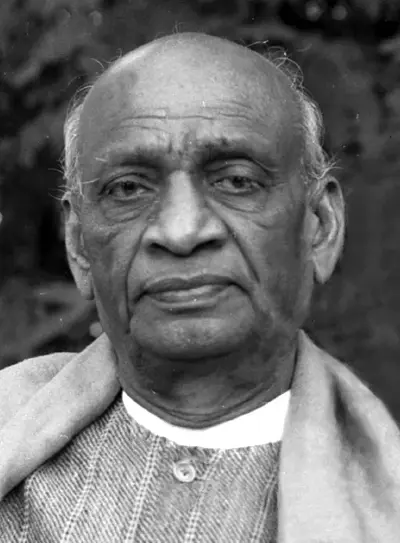
Sardar Vallabhbhai Jhaverbhai Patel, popularly known as Sardar Patel, was an Indian statesman. He served as the first Deputy Prime Minister of India. He was an Indian barrister, and a senior leader of the Indian National Congress who played a leading role in the country's struggle for independence and guided its integration into a united, independent nation. He was one of the conservative members of the Indian National Congress. In India and elsewhere, he was often called Sardar, meaning "chief" in Hindi, Urdu, and Persian. He acted as Home Minister during the political integration of India and the Indo-Pakistani War of 1947.
