Mustafa Kemal Ataturk Quotes
I do not want history to record me as someone who has bequeathed to his nation the institution of despotism.
Okyar, Fethi. Serbest Cumhuriyet Fırkası Nasıl Doğdu, Nasıl Feshedildi?. İş Bankası Kültür Yayınları, 2011, p. 89.

With so many revolutionary rulers of new nations suppressing all opposition, the history of Ataturk and Turkey is unique. Ataturk was so popular and his People’s Party so successful that there was no opposition and Turkey had one party rule. However, Ataturk was determined to have Turkey become a parliamentary democracy as good as the Western nations of Europe. So a tradition of multi-party democracy was needed. So Ataturk actually went to his friend Fethi Okyar and asked him to start an opposition party and oppose the government. Fethi was a strong supporter of the revolution and generally was in concurrence with Ataturk and the People’s Party on everything. Ataturk however convinced him that they had to start a tradition that would take Turkey through the future, and he did create a new party-- Serbest Cumhuriyet Fırkası (Liberal Republican Party) and worked hard to find differences with the People’s Party and the Government. One immediate contribution was the oversight that the new party provided—a strong tradition that exists to this day in Turkey.


Soon he had the power of a dictator but he didn’t force his will on the vast majority of the Cubans. His decrees made all the wealthy and the cronies of the dictator Batista outraged and most of them left Cuba. He was a dynamic demagogue and the people handed him dictatorial powers which he did not reject. He was so popular that he was the only leader in the Americas who would give 4 hour speeches and move through the streets without any bodyguards until the United States and dissident expatriates tried to assassinate him. With all that popularity, none the less he would not allow open criticism of his regime and jailed many political opponents. So he indeed became a dictator but never needed the machine gun to maintain power.


At the time of this statement most people thought that Bush was joking. But by the end of his Presidency many looked back on the quote and thought that Bush had such preferences. He unilaterally took the country into the Iraq War and assumed Presidential Powers that no other president had ever attempted. Most serious, his administration actually took the formal legal position that the President did not have to obey the law if he unilaterally thought that it was not in the nation’s interest from the point of view of the Commander in Chief. So many debate whether this quotation was a light hearted joke of a harbinger of his real feelings about the Presidency.

Charles I had caused the death of his subjects with impunity and was called to account. However, the English Parliament did not know what specific crime the King had committed. Kings had executed people, guilty of crimes and otherwise, for centuries. For what could a king be accountable. Cooke developed the crime of Tyranny and drew up and presented the indictment for that. The King was found guilty and executed. This was the first time in legal history that a ruler was called to account for crimes committed against his own people. It became the foundation for many trials thereafter including that of Saddam Hussein in 2006.

This quotation is a great demonstration of how much wiser and the better politician of all the crowned heads of Europe that Queen Victoria was. There were stirrings of freedom and desire for parliamentary government throughout Europe. Queen Victoria, even though and perhaps because she was a young woman, had a great feel for fairness and reasonableness and had read a great deal of history. There were some radical red socialists calling for complete radical revolution scaring European Royalty profoundly. They reacted very conservatively and with reaction, reverting to more tyrannical practices of the past urged in that path by very conservative, right wing advisors. Victoria also had little respect for some of the monarchs who had little interest in their people and much with their personal power and wealth. In the end, it was England which was the only nation which never had a serious radical socialist / communist threat, and that had much to do with Victoria’s political acumen and wisdom.


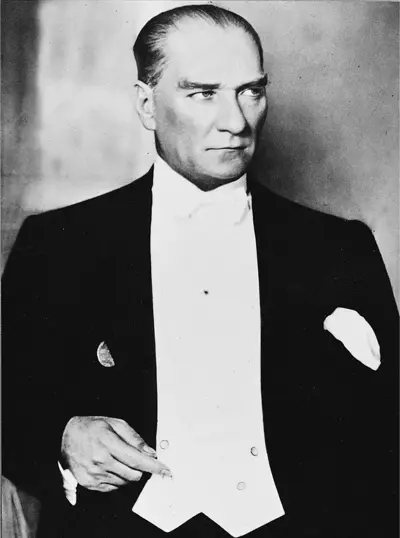
Kemal Atatürk was a Turkish field marshal, revolutionary statesman, author, and the founding father of the Republic of Turkey, serving as its first president from 1923 until his death in 1938. He undertook sweeping progressive reforms, which modernized Turkey into a secular, industrial nation. Ideologically a secularist and nationalist, his policies and theories became known as Kemalism. Due to his military and political accomplishments, Atatürk is regarded as one of the most important political leaders of the 20th century.
