Yoshijiro Umezu Quotes
I can say with confidence that we will be able to destroy the major part of an invading force.
Umezu was one of several members of the Japanese War Council, that did not want to surrender even after the second atomic bomb destroyed Nagasaki. He and the other hard liners were convinced that the Japanese could inflict such heavy casualties on an invading force of the mainland that the Allies would not insist on unconditional surrender and Japan could negotiate favorable terms. These hard liners had already lived through the firebombing of Tokyo which in casualties was as bad as the atom bomb attacks, and felt that they could maintain a defensive force even if all the major cities of Japan were destroyed. Fortunately for all parties, the Emperor overruled Umezu and the hardliners. Umezu and the other hard liners had personal reasons to want to negotiate terms. They had committed war crimes and did not want to be brought to account. He was tried after the surrender and sentenced to life in prison where he died of cancer after 4 years.
Yoshijiro Umezu 1882–1949, Japanese Chief the Imperial Japanese Army General Staff, Member of the Japanese Supreme War Council, Quoted in "A-Bombs Left Top Councils Of Japan Split" - Washington Post, July 17, 1995
Sourced by: Eigen's Political and Historical Quotations

At that time there were extensive meetings and discussions for the creation of what was to be the United Nations. The negative view of the United Nations or other international security organization is now and always has been held by a vocal minority in the United States.

During the presidential debates George W. Bush stated that he would be very hesitant to use the military for nation building around the world. Less than a year later, the Bush administration, faced with the September 11, 2001 terrorist attacks, launched a massive attack on the Taliban regime in Afghanistan. After fighting and winning the war, the military soon realized that they would in fact be involved in nation building. However, with the assistance of the United Nations much of the humanitarian burden was lifted from the U.S. military.


Greek invaders were marching on Istanbul

Japan was a militarist aggressive state when they started WWII in the Pacific. Their military brutalized China and almost every other country in Asia committing atrocities that those nations still are bitter about today. The unconditional surrender required that their new Constitution prohibit a military. However some of the Conservatives like Abe do not believe that Japan should be the only nation denied a military. Most of the rest of Asia even resents and fears the defense forces that they have and would seriously oppose a reestablishment of a military.

Germany had some world class physicists. Our scientists, military intelligence people, and political leadership assumed that the Germans were also seeking to develop the Atomic Bomb. Ironically, it turned out that they were not, and what Truman reported in this quotation was untrue (although that was not fully known at the time.) Einstein and several of the scientists who were early pioneers in modern physics were Jewish, and Hitler referred to the study of nuclear fission and fusion as “Jewish Science.” As a result, the German government did not commit the resources to the development of an atomic bomb. Instead, they were betting on the development of the Jet Airplane which they succeeded in deploying against the Allies at the end of the war. But they did not have enough or enough pilots left alive to fly them, and Germany was overrun by the Allied Troops. Prior to Truman’s erroneous report about the German development of an atomic bomb, there had only been one piece of evidence that the Germans were not developing one. An OSS secret agent, Moe Berg, had talked with Werner Heisenberg, at a Swiss scientific conference during the war. He was going to assassinate the greatest of the German physicists if Berg thought he was working on a nuclear device. Berg concluded from his discussions that Heisenberg did not know enough about nuclear fission to have been working on that. Berg did not kill Heisenberg, and reported that he did not think the Germans were developing a bomb as if they were Heisenberg would have been deeply involved. However, the American intelligence people and the American scientists, did not trust Berg’s analysis and conclusion. Berg was not a trained scientist. He was a professional baseball player—the NY Yankee backup catcher to Bill Dickey. He was a college graduate, a brilliant guy and a very fast learner who had studied physics books and papers before his assignment. Berg turned out to have been right, but that was not confirmed until a few years after the war. Truman had relied on an incorrect intelligence estimate when he made this quotation. It was not the first such error of intelligence analysis in American history and it would not be the last.


Later, he felt that the offense had become almost invincible. See {626741}. Tesla was one of the great American immigrant scientists. He found in America the kind of intellectual and operational freedom that did not exist in the rigid, monarch-controlled, Austro-Hungarian Empire. He developed patents and techniques that formed the technological bases of radio, telephone long distance, TV, cell phones, Wi Fi, just to name a few. Most important he was Thomas Edison’s great nemesis. Edison invented DC electric generators that could power factories or entire streets in a neighborhood. Tesler invented and developed AC electrical technology which could power entire cities and he could move electricity over long distances which Edison could not. Tesler was one of the first scientists to conceive of and try to implement “Big Science” where there were huge capital investments to develop machines and systems to do what had never been done before—philosophically like the CERN Hadron Collider. Tesler even convinced a large corporation to finance the construction of a massive building and tower so he could experiment with the wireless transmission of electricity. However, as the industrial democracies have learned, Big Science can only be funded by governments and it often takes sever working in consort to afford the huge investment that is required. In Tesler’s era, the federal and state governments did not fund scientific research so his work was not only technically ahead of his time but also conceptually. He anticipated most of the problems and need for a national power grid that was challenging America even at the beginning of the 21st century.


The only soldier ever so honored. See {604732} for Japanese attitude toward surrender.

China had a similar policy with each side wanting to establish more of a precedent for its ownership of the islands. Military flyovers, landing parties raising national flags by both countries triggered counter measures and the likelihood of casualties and even death to some soldiers. Both sides seemed willing to risk the lives of their troops as long as the conflict could be contained thereafter. But sometimes it cannot be.

The Scientific Project that developed the Atomic Bomb. Hundreds of thousands of American troops were on their way to join the invasion of Japan where there were huge American casualties expected when the two atom bomb drops ended the war. At the time, surprising to most people now, the use of the atomic bomb was not an issue of controversy at all. There were no Congressman who questioned it, no newspapers which editorialized against the use of the bomb. There were not even any other counties which protested its use. The blessing of ending the war, even at the cost of less than 200,000 deaths seemed a clearly desirable tradeoff when compared with the many millions of deaths that would have occurred had the bomb not been used. As an example, the conventional bombing of Tokyo before the nuclear weapons were used killed as many Japanese as either Hiroshima or Nagasaki.


What is interesting about this quote is that it is very much like many American politicians who support a large and strong military.

Ivan Khrfistoforovich Bagramyan. Most militaries including ours have generally been trained and equipped for the last war and not the next war.

Many historians argue that at this point the Confederacy was beaten and had they then surrendered everyone would have been much better off. But Davis and other Southern leaders, with their ideological and twisted moral logic dragged the war on for two more years and much of the South was destroyed making things even harder for the Southerners during Reconstruction.

He always appeared in a military uniform after that.

The “adversary” was Pakistan, which was frequently sending military and terrorist attacks into Kashmire much if which has been disputed by Pakistan ever since the Partition of India in 1949. India had a very disciplined and well led military and like most sophisticated military powers did not immediately retaliate for military incursions despite the public pressure to do so. Instead they gave themselves time to plan and organize the logistics for a series of surgical strikes at the terrorist and/or military concentrations Pakistan had deployed close to the border which they launched several days later.

Russia is not the only nation who believed this. There were and are some politicians and military officers in almost every country who believe this. However, for the last few centuries, this has rarely been the view held by the majority of the politicians and military in most nations. And even fewer where the leadership accepted this posiitin. Russia, was one of those counties that did hold this few and kade it policy was in the 2nd decade of 2016,

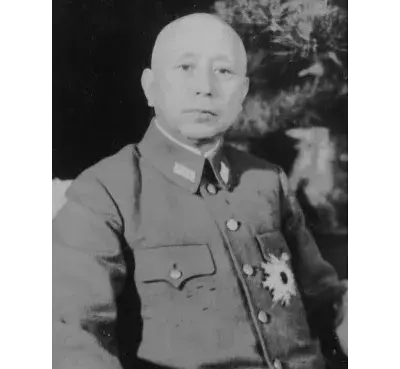
Yoshijirō Umezu (梅津 美治郎, Umezu Yoshijirō) was a Japanese general in World War II and Chief of the Army General Staff during the final years of the conflict. He was convicted of war crimes and sentenced to life imprisonment.
