George B. McClellan Quotes
I almost think were I to win some small success now, I could become dictator.
McClellan thought President Lincoln an oaf and toyed with the idea of taking over. Ironically, he was a terrible battle general and never would have any reasonable success on the battlefield.
George B. McClellan, 1826-1885, General-in-Chief of the Union Army, Democratic candidate for President, Letter to his wife early in the Civil War
Sourced by: Eigen's Political and Historical Quotations


FDR was a marvelous judge of men and their character. De Gaulle could not separate himself from France and pushed the French Republic towards one man rule (himself) as much as anyone since Napoleon Bonaparte.


At the time of this statement most people thought that Bush was joking. But by the end of his Presidency many looked back on the quote and thought that Bush had such preferences. He unilaterally took the country into the Iraq War and assumed Presidential Powers that no other president had ever attempted. Most serious, his administration actually took the formal legal position that the President did not have to obey the law if he unilaterally thought that it was not in the nation’s interest from the point of view of the Commander in Chief. So many debate whether this quotation was a light hearted joke of a harbinger of his real feelings about the Presidency.


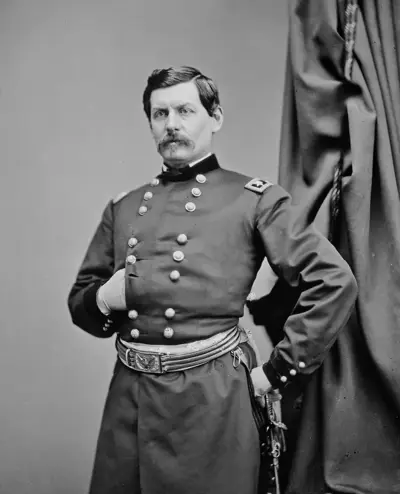
George Brinton McClellan was an American soldier, civil engineer, railroad executive, and politician who served as the 24th Governor of New Jersey. A graduate of West Point, McClellan served with distinction during the Mexican–American War (1846–1848), and later left the Army to work on railroads until the outbreak of the American Civil War (1861–1865). Early in the conflict, McClellan was appointed to the rank of major general and played an important role in raising a well-trained and organized army, which would become the Army of the Potomac in the Eastern Theater; he served a brief period (November 1861 to March 1862) as Commanding General of the United States Army of the Union Army.
