Dorothy Kilgallen Quotes
I actually turned down an opportunity for a private interview with Adolph Hitler.
Kilgallen, Dorothy. Girl Around the World. David McKay Company, 1936, p. 74.


Both of these famous Americans were admirers of Nazi Germany and Adolf Hitler. They both accepted medals from the German dictator. And both of them were apologists for German aggression and urged the United States not to side with England and to stay neutral in the War. The next year Germany declared war on the United States.


1st Earl Lloyd-George of Dwyfor. There was a small but significant pro-Nazi faction in England as in the United States.


He had abdicated and was serving as the Governor of the Bahamas at the time. While the public was given the reason for has abdication as his love for a divorced woman, his pro Nazi viewpoints which were not publicly known in England, made him unacceptable and his treason a danger to England at war with Nazi Germany.


He defeated Adolf Hitler at the polls in 1932, but the next year he was compelled to yield to Nazi power and appointed Hitler Chancellor of Germany.


This quotation is important because there are some who believed that the professional German Soldiers did not respect Hitler and his murderous policies. This quotation shows that at least publicly Donitz had no problem extolling Hitler above all others. After the war Donitz was found guilty of Unrestricted Submarine Warfare and using thousands of slave laborers in his shipyards. He was sentenced to 10 years, one of the lightest sentences if the German War Crimes Trials.


Frau Wagner was one of several agents of Nazi Germany sent to the United States to develop good will for Germany and funds for Hitler. Anti-German feeling was still high from the First World War but America had its share of right wingers like Ford. Hitler and Ford were mutual admirers. See {586988} for Hitler’s view of Ford.
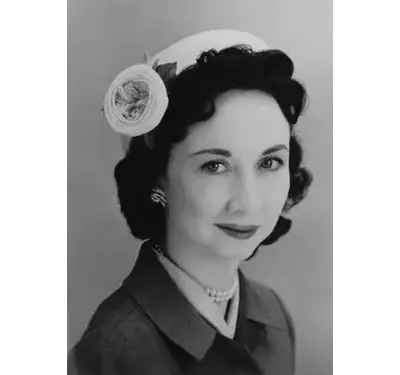
Dorothy Mae Kilgallen was an American journalist and television game show panelist. After spending two semesters at the College of New Rochelle, she started her career shortly before her 18th birthday as a reporter for the Hearst Corporation's New York Evening Journal. In 1938, she began her newspaper column "The Voice of Broadway", which eventually was syndicated to more than 140 papers. In 1950, she became a regular panelist on the television game show What's My Line?, continuing in the role until her death.
