Mother Teresa Quotes
Human rights are not a privilege conferred by government. They are every human being’s entitlement by virtue of his humanity. The right to life does not depend, and must not be contingent, on the pleasure of anyone else, not even a parent or sovereign...
Agnes Gonxha Bojaxhui
Mother Teresa, 1910-1997, Yugoslav Nun, Nobel Laureate in Peace [India], Amicus brief filed before the U.S. Supreme Court, Loce v. New Jersey, February 1994
Sourced by: Eigen's Political and Historical Quotations

This statement summarized what had been a basic principle of American Law as derived from English law. See {587704}.


Jefferson had deliberately modified John Locke’s phrase “life, liberty and property.


For similar views see Franklin Delano Roosevelt, Potter Stewart and the National Union for Social Justice.


Hayward claimed that Wilson was the first American President who ever criticized the American Constitution. Many do not agree as Madison and Jefferson in part, along with most other Americans, found the Constitution so wanting that it was ratified only on condition of the passage of the Bill of Rights. Jackson, was distressed by the limitations on the President and many others had their objections, but Wilson, before he became a politician was a prominent academic political scientist and wrote voluminously and had an intellectual following so his criticism was not considered so “political” as others.

This was written and adopted by Vermont a decade before the United States Constitution the ideas for which were in existence in America before the Constitutional Convention in Philadelphia.

The preamble to this declaration of womens’ rights cleverly beginy s with the words of the Declaration of Independence with the single change that “all men” is replaced with “all men and women.” The message was clear. If the founders had a moral right and duty to revolt for these objectives women would be justified and duty bound to make similar efforts. That message terrified many men of the era.


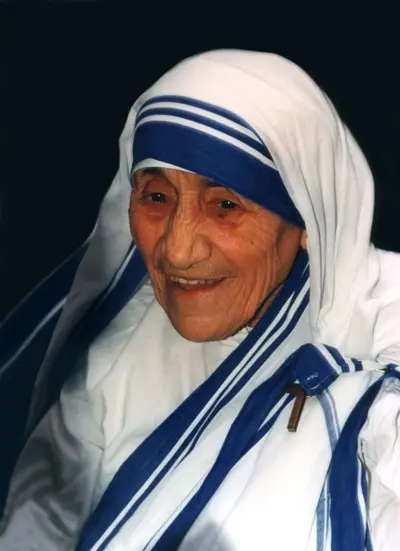
Mother Mary Teresa Bojaxhiu, honoured in the Catholic Church as Saint Teresa of Calcutta, was an Albanian-Indian Roman Catholic nun and missionary. She was born in Skopje (now the capital of North Macedonia), then part of the Kosovo Vilayet of the Ottoman Empire. After living in Skopje for eighteen years, she moved to Ireland and then to India, where she lived for most of her life.
