Andre Gide Quotes
Historians of the future will examine how and why, the end disappearing behind the means, the Communists spirit ceased to be opposed to the Fascist spirit, and even to be differentiated from it.
Andre Gide, 1869-1951, French Writer, Diary, August 5, 1937
Sourced by: Eigen's Political and Historical Quotations


1st Earl Baldwin of Bewdley. Before the 2nd World War


This was a very important quotation in that Sartre was a very influential liberal philosopher and when he condemned Russian communism, many other liberals opposed communism, and those who had already felt vindicated in their decision.

This quotation is very interesting in that many of Mrs. Roosevelt’s detractors constantly accused her of being a communist. They obviously had not read this column of any of the many where she shows antipathy to Communism.

The “Blue Shirts” were so called because of the color of the shirts that the young fascist thugs of the Nationalists wore in China—a color later adopted by the communists for dress. European Fascists tended to have young thug “enforcement” type battalions which were named for the color of their shirts: “Brown Shirts” in Germany, “Black Shirts” of the Fascist movement in England. Ironically, the Red Scare after WWII, convinced American leaders to support Chiang (who called himself and his party the “nationalists”) who was a deep admirer of fascism himself. Chiang’s version of Fascism which combined European type Fascism with traditional Asian warlordism and corruption alienated the majority of the Chinese peasants. America was forced to choose between Chiang led corrupt Nationalist fascists, and Mao led communists. We chose Chiang, but Mau and the Communists won. Chiang’s forces then seized Taiwan and this was the only part of China that did not go communist. After Chiang’s death, the island mini-nation became less fascist and more democratic, and by the 1990’s became a full-fledged democracy.


Hayek uses this line to explain that fascism may emerge when communism—or belief in its promise—fails, as seen in Stalinist Russia and pre‑Hitler Germany.

The Fascists almost fulfilled Spengler’s prediction.
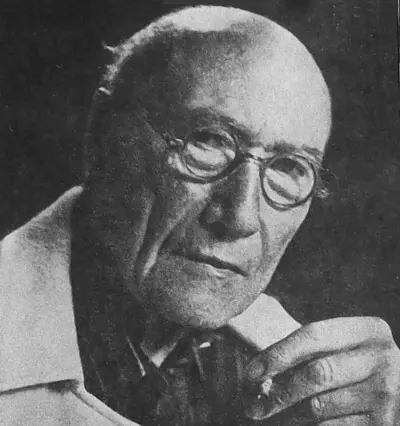
André Paul Guillaume Gide was a French author and winner of the Nobel Prize in Literature (in 1947). Gide's career ranged from its beginnings in the symbolist movement, to the advent of anticolonialism between the two World Wars. The author of more than fifty books, at the time of his death his obituary in The New York Times described him as "France's greatest contemporary man of letters" and "judged the greatest French writer of this century by the literary cognoscenti."
