DeWitt Clinton Quotes
Here, no privileged orders – no factitious distinctions in society – no hereditary nobility – no royal prerogatives exist, to interpose barriers between the people, and to create distinct classifications in society. All men being considered as enjoying an equality of rights, the propriety and necessity of dispensing, without distinction, the blessings of education ….
DeWitt Clinton, 1769-1828, U. S. Senator (Anti-Federalist Republican, NY), Mayor of New York City, Governor of New York, Peace Party candidate for President of the United States, “Father of Free Public Schools", Speech, Free Schools, New York City, December 11, 1809
Sourced by: Eigen's Political and Historical Quotations


As hard as it is for us to imagine today, while her husband was President of the United States, the First Lady wrote a nationally syndicated newspaper column every single day with politics frequently the subject. While she usually agreed with the President, there were occasions where they seemed to not see things exactly the same. She tended to be more liberal than he. However, there were those who believed that when she criticized politicians, it was with FDR’s knowledge and blessing and she sometimes did his “dirty work.” Eleanor Roosevelt was one of the most influential people in the country—certainly more-so than any First Lady before and since.

While Hoover was generally correct, he was also of the opinion that providing equal opportunity was all that the government needed to do. His lack of attention to other economic variables and potential problems made him totally unprepared for the Great Depression which would occur the following year and his narrow view of the role of government provided no relief or improvement as those of his successor FDR did.


This remarkable statement was written in about 1840 and there was probably then few people of either gender who would think such a thing possible.


He was reacting to the racial claims of Adolph Hitler in German
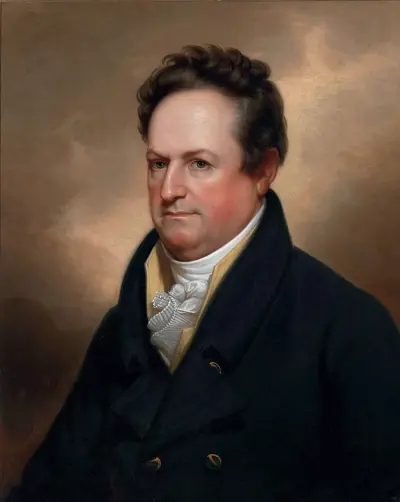
DeWitt Clinton, whose name was almost always spelled De Witt during his lifetime and until the late 20th century, was an American politician and naturalist. He served as a United States Senator, Mayor of New York City, and as the sixth Governor of New York. In this last capacity, he was largely responsible for the construction of the Erie Canal. Clinton was a major candidate for the American presidency in the election of 1812, challenging incumbent James Madison.
