Roscoe Conkling Quotes
He [Ulysses S. Grant] will hew to the line of right, let the chips fly where they may.
The reference is to wood chopping, where flying chips are a constant source of injury. Often misquoted with "fall" rather than "fly."
Roscoe Conkling, 1829-1888, U. S. Congressman & U.S. Senator (Republican, NY), Nominating Speech, Republican National Convention, Chicago, June 5, 1880
Sourced by: Eigen's Political and Historical Quotations


Although popular with some, she was a polarizing politician. When turned out of office, she did not lost an election. Here own party got fed up with her righteousness.

Samuel Langhorne Clemens, 1835-1910. From the point of view of the person or company that bribes or gives campaign contributions to legislators, there has often been a problem that when the heat is on the legislator might begin to refrain from voting as was expected. Twain was joking in this quotation by using the world “morality” to describe the obligation of the legislator to vote for the interest of the briber or campaign contributor. However, there were several major businessmen who actually saw the bribed legislator as having a moral and ethical duty to continue to protect the interest of the briber.

Rules are inflexible, but principles can be balanced and guide people more judiciously.


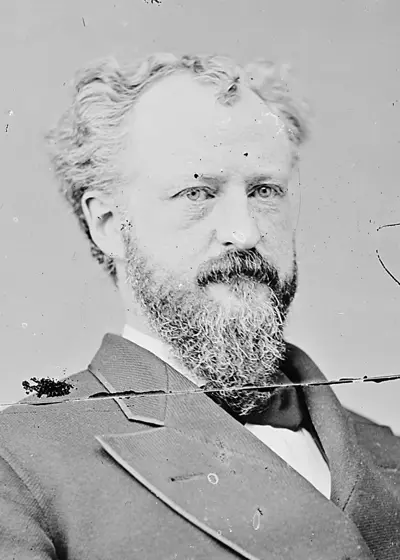
Roscoe Conkling was a lawyer and politician from New York who served both as a member of the United States House of Representatives and the United States Senate. He was the leader of the Stalwart faction of the Republican Party, the first Republican senator from New York to be elected for three terms, and the last person to turn down a U.S. Supreme Court appointment after he had already been confirmed to the post. While in the House, Conkling served as bodyguard for Representative Thaddeus Stevens, a sharp-tongued anti-slavery representative, and fully supported the Republican war effort. Conkling, who was temperate and detested tobacco, was known for his physical condition, maintained through regular exercise and boxing, an unusual devotion for his time. Conkling was elected to the Senate in 1867 as a leading Radical, who supported the rights of African Americans during Reconstruction.
