John MacDonald Quotes
He shall hang though every dog in Quebec bark in his favor.
The Canadian government had put down a brief rebellion led by Louis Riel, 1844-1885, in Winnipeg. French Canadians in Quebec identified with the nationalist and many protested his death sentence. Riel was hanged shortly thereafter.
John A. MacDonald, 1815-1891, First Canadian Prime Minister (Conservative), Statement on Louis Riel, 1885
Sourced by: Eigen's Political and Historical Quotations

John Brown, in a futile effort to start a slave insurrection, raided the arsenal at Harper’s Ferry. His raid failed and he was captured and hanged. However, he became a martyr to the abolitionist movement, and his death is still sung of gloriously to this day. See {584889} and {604003}.


Louis Eugene Walcott. Malcolm X had criticized Elijah Mohammed for sexual behavior with staff.

He was being cheered by a large crowd.


Falwell supported capital punishment. In this statement he was describing it, not opposing it.

There was quite a bit of racism in the American West. Not the last sentence referring to the complexion of the defendant.

The FLQ was a Quebec revolutionary group seeking Quebec independence from Canada.

Campbell carried out the order although many MacDonalds escaped in the highlands. The particular massacre has always taken on an even greater infamy because the Campbell murderers had been given food and hospitality by the MacDonalds. This began the most bitter of the Scottish clan feuds that persists into modern times.

France was coming under great criticism from the rest of Europe for the bloodbath of executions that the Revolution had become. Many French thought that perhaps they were executing too many people. Saint-Just urged them to hold the course and they did.

Reacting after reading parts of the Pentagon Papers, a study on the history of the Vietnam war he had ordered:

He was describing a real case in Canada. There as well as the United State, for those who oppose capital punishment give as their main reason the mistakes made by the criminal justice system, and the innocent people who have been executed.

He was a very large, heavy set man, and he wanted the Turk to know that he had strong connections in America. The Turks had made the mistake of allying themselves with Germany in WWI, but as thinks were not going very well for the Germans in the war, the Turkish leadership did not want to needlessly offend the United States. Aaronsohn was not hanged.


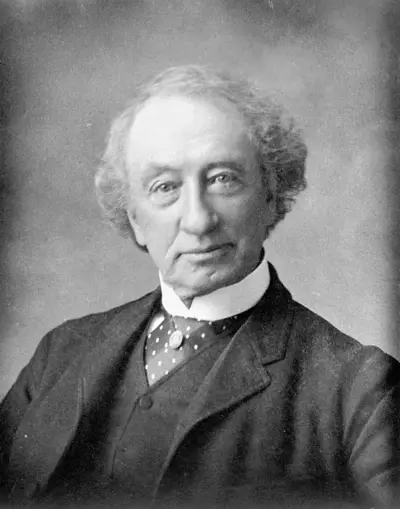
Sir John Alexander Macdonald GCB PC QC was the first prime minister of Canada (1867–1873, 1878–1891). The dominant figure of Canadian Confederation, he had a political career that spanned almost half a century. Macdonald was born in Scotland; when he was a boy his family immigrated to Kingston in the Province of Upper Canada (today in eastern Ontario). As a lawyer, he was involved in several high-profile cases and quickly became prominent in Kingston, which elected him in 1844 to the legislature of the Province of Canada. By 1857, he had become premier under the colony's unstable political system.
