D'Arcy McGee Quotes
He is not seldom a dealer, by wholesale or retail, in spirituous liquors; sometimes a lawyer, sometimes an editor. He is always ready with his money subscription to the church, but seldom goes to church, He lies up on Sunday, after the toils of the week, reading a sporting journal or a police gazette. He has a ready rowdy sort of rhetoric, and is never at a loss, when called on, to propose or second a resolution. He is particularly savage on England, and grows quite pathetic, unprepared as he is, at the mere mention of " the old land." A fair share of mother wit-a sufficient stock of spending-money, and a vast deal of brass- complete the equipment of this very active, very important, and much courted individual.
He also had harsh words for the American Fenians which he published and these attacks were answered with his murder in Montreal in 1868. The Fenians assumed that since he had been an Irish radical patriot he would support their cause. However their indiscriminate violence and terror against anything British including Canada turned McGee’s pen against them. The American Fenians actually tried to mount an invasion of Canada in 1868 and a pitched battle ensued. They dealt with McGee in their classic manner.
D'Arcy McGee, 1825-1868, Irish National and member of Canadian Parliament (Liberal), Description of the kind of American Irishman who he believed brought Irishmen into ill repute
Sourced by: Eigen's Political and Historical Quotations

He was particularly referring to the reigns of Queen Elizabeth I and James I.

Browne, an Englishman by birth, was the instrument of the Protestant Reformation in Ireland.


He was the only English Pope. The act of invasion had been sanctified earlier in Adrian’s Papal Bull. See {610518}. Henry’s invasion was successful but the occupation and reform was a disaster which has ramifications to this day.
He was the only English Pope. This was the authority that enabled English King Henry II to invade Ireland. Many historians consider it the beginning of the problems between the Ireland and England which persists to this day. See {610520}. Some scholars think that this bull was a forgery stating that the writing style was different from other bulls of Adrian IV. Opponents believe that a change in secretaries could easily have accounted for the difference.


1st Earl of Beaconsfield
Anna Maria Fielding married Samuel Carter Hall but published her many works as S. C. Hall.
There was no Catholic university in Ireland at the time. Unlike England where Catholic students attended both Catholic and Protestant schools, the Irish Priests were opposed to Catholic young men attending Protestant schools. See {617782} for the view of a leading academic of the era.
a lower class Catholic area of Ireland

He had broken formation in the 1588 Great Armada defeat by England and was ordered onboard another ship of officers to be disciplined (scapegoats for the defeat). His ship was severely damaged, blown off course, and wrecked on the Irish coast. Note that he refers to the Irish as “savages” which was in comportment with the English perception of the Irish at the time—see {639438}. When shipwrecked the Irish robbed and stripped the Spaniards of every shred of their clothing, but they did not kill the few Spaniards who were left alive. They lived off roots and plants until they ran into other Irish who saw them as allied Catholics against the hated English. These Irish assisted them from being captured by the English and helped the escape back to Spain in a small boat.


He was arguing to reserve some states as Muslim states by designation. 7 years later he would insist on a separate homeland. India was partitioned and Pakistan and Bangladesh resulted but at a fearful cost of tens of millions of lives.

He was one of the strongest English advocates of colonization of the New World

The monetary corruption of the Church and many of its priests did not go unchallenged by Catholics of the day.


Colton also ordered the Abbot to have no further mistresses. There was a basic concern about and prejudice against the Irish for their relatively promiscuous norms regarding sex. See {639438}.

Much of the then prevailing opinion was the opposite—that men and women should be taught these things from birth and education. Right and God’s plan, they argue, need not be contested for with temptation and wrong or worse, the word of Satan.
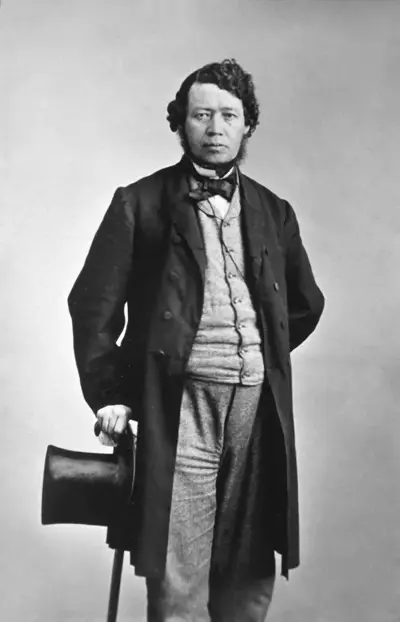
Thomas D'Arcy Etienne Grace Hughes McGee was an Irish-Canadian politician, Catholic spokesman, journalist, poet, and a Father of Canadian Confederation. The young McGee was a Catholic Irishman who opposed British rule of Ireland, and worked for a peasant revolution to overthrow British rule and secure Irish independence. He escaped arrest and fled to the United States in 1848, where he reversed his political beliefs. He became disgusted with American republicanism and democracy, and became intensely conservative in his politics and in his religious support for the Pope. He moved to Canada in 1857 and worked hard to convince the Irish Catholics to cooperate with the Protestant British (members of the church) in forming a Confederation that would make for a strong Canada in close alliance with Britain. His passion for Confederation garnered him the title: 'Canada's first nationalist'. He fought the Fenians in Canada, who were Irish Catholics that opposed the British and resembled his younger self politically. McGee succeeded in helping create the Canadian Confederation in 1867, but was thought to have been assassinated by Patrick J. Whelan in 1868.
