Bill Buford Quotes
Gramercy Park is a four-acre square given in perpetuity to the residents surrounding it, 170 years ago, by Samuel Ruggles, a real estate developer of immoderate means.
Buford, Bill. Heat. Alfred A. Knopf, 2006.


Use included renting it. What he opposed was simply holding land when whites were driving Indians off their lands because all the unused land outside of the reservation was owned by someone and the asking price was very high. Ingersoll was considered to be the greatest orator and political thinker of his day, but his overt atheistic views curtailed his elected political career.


Earlier, treaties had been negotiated whereby whites purchased certain Indian lands. Tecumseh and others had objected not only to the concept of land sale, but to those who had sold the lands {612650}.

This is a law that even exists today in most municipalities for sidewalks but not often for the streets themselves. This was probably the origin in Western law of the notion that property owners should be responsible for the public sidewalks or streets.

He repudiated all cases in which a Muslim sold land to a non-Muslim, even though in the Holy Land, Christians, Jews and Muslims have been buying and selling land there to each other for centuries. This has been going on from the time of Christ for the Christians and Jews, and the Muslims from the time of the founding of Islam in the 7th Century. Even Caliph Omar, the authority he cited, allowed and recognized sales of land to Christians and Jews and purchases from them. Rantisi and his followers have actually killed Palestinians who have sold land to Jews.

Paine, one of America’s founding fathers and the man most responsible for influencing Americans to revolt, is generally not given much attention in modern times. One of the main reasons was that his philosophy regarding land and land ownership is today considered socialist if not communist. Paine’s other views are mostly Apple pie American, but this is shocking to many Americans.

The major revenue of the Federal Government had initially been import duties. (There was no income tax then.) The sale of the vast public lands turned out to be another Federal income source.

This was a serious problem in major cities in the 1930s but became much worse over time as the cities grew and real estate values escalated. In modern times the problem even spread to affluent suburbs where the police, fire fighters, teachers, and other civil servants can often not afford to live in the community that they serve.

Essentially whereas many property owners have paid for their ownership in recent times, almost all real estate, wherever it is, that is privately owned was at some time in the past obtained by force, fraud, deceit, from someone else. In most cases, the owners who were killed, defrauded or otherwise removed from their land, had previously killed, defrauded or otherwise removed owners before them. There is almost no guilt untainted land. This was not just a product of capitalism, but has been a factor in every ism that has governed human society.

Day was often associated with left wing causes, but she was very hard to classify in traditional political terms. This quotation shows that unlike most communists and many socialists, she was an advocate of private property although she fought for the ability of a larger proportion of the population to have property.

This is an important quotations for two reasons. First, one of the white Europan myths in the colonial era was that the Native America had not concept of land ownership and title. This quotation clearly refutes that/ Second, this shows that some Europeans coming to the new world opposed the view that the white Christians and a moral right to the Native American “heathen” land. A few like Williams did not.

This law provided for Individual Indian ownership of land which was seen as an essential step to stimulate assimilation of Indians into American society. For some it had that effect, but it also weakened the tribal community as the allotted land was then no longer controlled communality by the tribe and civil governance of the allotted lands were transferred to the state and local government and away from the traditional tribal government. In some cases traditional tribal government became impossible. Also, the Indians who were allotted the land could and often did sell it to whites. Land owned by Indians decreased from 138 million acres in 1887 to 48 million acres in 1934—a 65 percent reduction. This Act also imposed a patriarchal household onto many matrilineal Native societies, in which women had controlled property and descent, since under the sexist American law at that time all family property was owned and controlled by the husband. In 1934 President Franklin Delano Roosevelt supported the US Indian Reorganization Act. It ended allotment and created a "New Deal" for Indians, including renewing their rights to reorganize and form their own governments. Much of the damage of the Dawes Act had already been done however. See Senator Henry Moore Teller’s criticism of the Dawes Act {633120}.
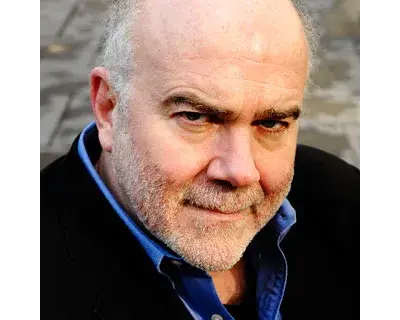
Bill Buford (born 1954) is an American author and journalist. Buford is the author of the books Among the Thugs and Heat: An Amateur's Adventures as Kitchen Slave, Line Cook, Pasta-Maker, and Apprentice to a Dante-Quoting Butcher in Tuscany.
