Ross Barnett Quotes
God was the original segregationist.
Religion has been on both sides of the racism issue. In general, slavery the world over and in the American South needed the support of mainstream religions. At the same time, religion has been one of the major forces for abolition. The two mainstream Protestant religions of the South, the Baptists and the Methodists split from their Northern brethren in the 19th century over the slavery issue, and they have never united.
Ross Barnett, 1898-1987, Mississippi Governor (Democrat), Quoted on C-SPAN Book TV, July 10, 2010
Sourced by: Eigen's Political and Historical Quotations

Billy Sunday was the most famous preacher of the day. Unlike the vast majority of white preachers, he not only preached to black audiences but exuded an atmosphere of friendliness and comfort around Blacks that amazed most. Most Black leaders thought Sunday was very good for race relations, but there were some clergy like Grimke who criticized him. Sunday was castigated by many racist whites for preaching to Blacks, but he did not go as far as to condemn or preach against racism and the discrimination of the day and he would not preach to an integrated audience. Grimke, in contrast, preached to an integrated congregation and was one of the few white clergy who did in the South. (Washington DC was then a southern, segregated city.) See {585415} for another critique of Sunday.

He was not only an atheist himself, but he was a major opponent of organized religion which he regarded as one or the major initiators and drivers of slavery, segregation and discrimination. For this reason he was critical of Martin Luther King—{583307}. His irreligiosity had always prevented his gaining much support from his fellow African Americans even though a great writer like H. L. Menken considered Schuyler, "the best writer in America".

Billy Sunday was the most famous preacher of the day. Unlike the vast majority of white preachers, he not only preached to black audiences but exuded an atmosphere of friendliness and comfort around Blacks that amazed most. Most Black leaders thought Sunday was very good for race relations, but there were some critics like Grimke. Sunday was castigated by many racist whites for preaching to Blacks, but he did not go as far as to condemn or preach against racism and the discrimination of the day and he would not preach to an integrated audience. See {585416} for another critique.
Warren a Republican from California who knew Palmer for years, stood up, put his arm around Palmer and told him, “Kyle, you and I will always be friends” and walked out.


Jones, like many religious leaders at the time was an inveterate racist. He not only branded anyone advocating against segregation as “in opposition to God”. Jones also solicited the support of the Ku Klux Klan, and like many clerics would never condemn the KKK beatings, tortures, lynchings and murders.

Phelps was a Copperhead Democrat who was a virulent racist, an enemy of Lincoln and supported McClellan against Lincoln in 1864. His extreme disrespect for the President and his racism was not appreciated in Vermont, and Phelps not only failed to help McClellan but destroyed his own credibility in his home state of Vermont. Phelps had been practicing law in New York City where there was a large Copperhead, racist and anti-Lincoln part of the population there.


The reason for secession was the threat to slavery, which was a great threat to the slave-owners of the South. However, the non slave-owners had a very strong vested interest in maintaining slavery in that most Southerners had been brought up with such a negative view of Blacks that they were paranoid of Black equality or even worse some Blacks in positions of authority over whites. At the time, it was the Republican Party that was the advocate for minority equality and the Democratic Party embraced the racists. The parties would flip flop after the Civil Rights Act of 1964 ending legal segregation was passed by a Democratic President and a Democratic Majority Congress.

This classic quotation illustrates several things. First, the degree of racism that existed in 1944 in West Virginia. Second, not how young Robert Byrd immediately leaped from the possibility of integrating our fighting forces to interracial sex. That has been typical of white racism in America—a preoccupation with race and sex. Last, Byrd who became a member of the KKK, completely changed his mind over the year and ended up supporting the things that, as a youth were worse than the demise of the nation. He matured and grew on the race issue as much of the country did and ended as a strong supporter of equality and civil rights—including affirmative action.


The first sentence is inscribed on the Jefferson Memorial in Washington DC. The last two sentences are rarely quoted.


Perhaps there is no more dramatic quotation illustrating MacArthur’s arrogance where his own views and decisions should obviously prevail regardless of the policies of his superiors and his commander-in-chief. The army had been officially integrated by President Truman, The reality was that the general honestly believed that he had no superiors among the military, that civilians should not control the military, and in any event that the President—Truman—was not fit to be Commander-in-Chief.

He was lecturing to an audience of 1500 Blacks. Darrow was castigated for telling Negroes that they did not have an inherently inferior capacity from whites, This was feared would make them too demanding and insist on unrealistic equality.


The letter was written in the supposed style of a Black after Emancipation and includes most of the ugly false stereotypes of the worst of the racists of the present and the slaveowners of past times. Williams stated that he was not a racist and was trying to make a point about freedom required risk and responsibility. However, the effort was interpreted by many people, Black and white, to be insulting and a put down of African Americans. At the same time, although most of the Tea Party members were not racists, most of the racists in America were supporters of the Tea Party. Those people interpreted the quotation as "telling it like it is" about Blacks who do not want the responsiblities and risks of freedom and are not yet developed sufficiently to be equal citizens in a democracy.
This quotation illustrates the Catch 22 dilemma that faces a minority. Black slaves were not allowed to marry and have formal families. After the Civil War racists warned against Blacks who had no respect for marriage monogamy end civil family life. See {619099} But when the slaves were freed and the ex slaves attempted to formalize and solemnize their marriages, they were castigated for that – acting like white people.

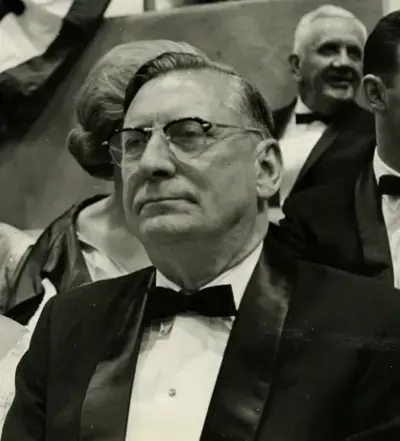
Ross Robert Barnett was the Governor of Mississippi from 1960 to 1964. He was a prominent member of the Dixiecrats, Southern Democrats who supported racial segregation.
