Alice Morse Earle Quotes
From the hour when the Puritan baby opened his eyes in bleak New England, he had a Spartan struggle for life.
Earle, Alice Morse. Customs and Fashions in Old New England. Charles Scribner's Sons, 1893, p. 1.


Anne Hutchinson was tried by the Puritan religious and civil court for heresy. She started with Bible Study classes in her home and drew a substantial following. The clergy at the time were threatened and outraged. It was one thing for a woman to teach Bible Study to other women, but to also have men with the women was too much. The decision of the court was that she was banished from the colony. See {584753}.


The colony created out of a political dispute with the Massachusetts Bay Colony, was created when in June of 1636, Hooker and his entire congregation, driving their cattle and carting their belongings, left Massachusetts and set out for the Connecticut Valley, founding Hartford and a new colony. The following year the constitution was written and ratified. It was in many ways similar to the Massachusetts legal system except that it was written and could not easily be changed. However, there were two important historical innovations. First, while Massachusetts had limited voting rights to members in good standing of the Puritan Church, The Fundamental Orders provided for separation of church and state and allowed others (males only) to vote as well. See {624151}. The other innovation was that this appears to be the first introduction of term limits in America. It limited the Governor to a single term, unlike Massachusetts where Governor Winthrop was a fixture.

This is a quotation which shows that Christmas was not a Christian Holiday that was commonly celebrated In early America. The reason that this is important is when there were many legal battles of public schools and municipalities celebrating Christmas and exhibiting crèches and Christmas trees, several of the proponents argued the doctrine of originalism—namely that we should not declare unconstitutional anything that was common and accepted at the time of the Constitution’s writing, debating, and ratification. They argued that the First Amendment was not intended to cover celebrations of Christmas as the founding fathers would not have made unconstitutional that which was common. While the principle of originalism has advocates and critics, the originalism theory does not hold regarding Christmas because Christmas was not commonly celebrated in early America. In no state was Christmas a holiday, and there were jurisdictions that had actually outlawed the celebration of Christmas which was associated with Catholics and not all of them. See {629843} for another.

The penchant for Southern conservatives to always blame outsiders whenever there were local people demanding change or reform may have begun here. It reached its peak in the Civil Rights Movement of the 1960s. There was however, a conscious effort of the Massachusetts Patriots to have descriptions of their revolutionary activities sent as newspaper articles throughout all the colonies quickly after the events. The Americans thus were able to frame all the issues, before the reports could get to London and the British thus got their viewpoints to the public weeks and months after the revolutionists did.


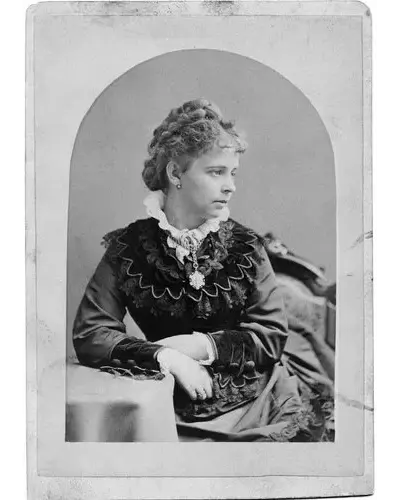
Alice Morse Earle was an American historian and author from Worcester, Massachusetts. She was christened Mary Alice by her parents Edwin Morse and Abby Mason Clary. On 15 April 1874, she married Henry Earle of New York City, changing her name from Mary Alice Morse to Alice Morse Earle. Her writings, beginning in 1890, focused on small sociological details rather than grand details, and thus are invaluable for modern social historians. She wrote a number of books on colonial America (and especially the New England region) such as Curious Punishments of Bygone Days.
