Daniel Webster Quotes
From the accession of Henry the Seventh to the breaking out of the civil wars, England enjoyed much greater exemption from war, foreign and domestic, than for a long period before, and during the controversy between the houses of York and Lancaster. These years of peace were favorable to commerce and the arts. Commerce and the arts augmented general and individual knowledge; and knowledge is the only fountain, both of the love and the principles of human liberty.
Webster, Daniel. "The Bunker Hill Monument." The Works of Daniel Webster, Vol. 1, Charles C. Little and James Brown, 1851, p. 68.


His hope that the elite intelligentsia would lead the nation was thwarted by Islamic fundamentalism which destroyed most of Pakistan education by only teaching religion in its Madrassas and not allowing the leadership to have compulsory education. There has been an enormous brain drain with a huge number of the Pakistani intelligentsia on which Jinnah pinned his hopes, had no opportunity in Pakistan and emigrated to the United Kingdom and America.


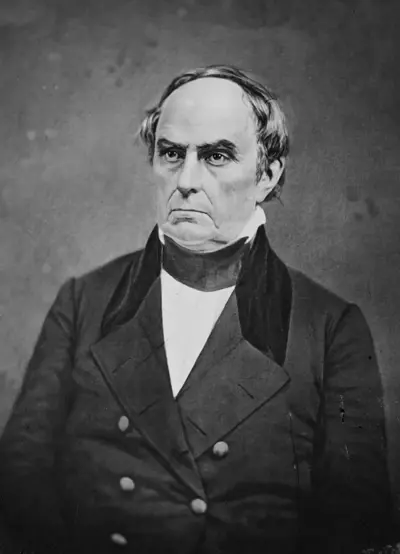
Daniel Webster was an American lawyer and statesman who represented New Hampshire and Massachusetts in the U.S. Congress and served as the U.S. Secretary of State under Presidents William Henry Harrison, John Tyler, and Millard Fillmore. As one of the most prominent American lawyers of the 19th century, he argued over 200 cases before the U.S. Supreme Court between 1814 and his death in 1852. During his life, he was a member of the Federalist Party, the National Republican Party, and the Whig Party.
