Thomas F. Eagleton Quotes
From little involvements—little CIA wars—big wars grow.
Thomas F. Eagleton, U.S. Senator (Democrat, MO), Senate Debate, July 20, 1973
Sourced by: Eigen's Political and Historical Quotations


The 6 Day War began less then 6 months later. This was another failure of U. S. Intelligence. Essentially, Rusk and others took the belligerent speeches of Nasser and other Arab leaders as rhetoric meant only for local consumption and did not realize that the Arabs had so deluded themselves that they thought that they could really destroy the state of Israel. American intelligence assumed that they knew better and their threats were just traditional Arab exaggeration and boasting.


2nd Earl of Guilford. Britain had a double standard of how they would fight wars and battles. If the contention was a rebellion, more mild military means would be used. But if a foreign war, they would use all means. For example, the use of mercenaries would not be used in most rebellions. With this letter, Lord North was escalating the American Revolution into a “foreign war”. As a result, not only would mercenaries be used, but so would Indian allies whose mode of war was not as restrained as the British troops. It also allowed for emancipating slaves and inviting them to take up arms. With this quotation, the American Revolution was raised to a new and more serious military level. See {634115} for the instructions to implement this policy.


Compare this to Bernard Baruch's quotation about a cold war the year before.


President Polk and General Zachary Taylor will not He was the last President before Texas became a State. Most of us are surprised that the Texas President opposed the Mexican War.


At first glance, the reader might think that this quotation in a leading university newspaper was from the Vietnam War era. However, it was argument against U. S. involvement in World War II. There was a very negative reaction to Wilson’s visions and claims for the First World War which never did come to pass that stuck with many.


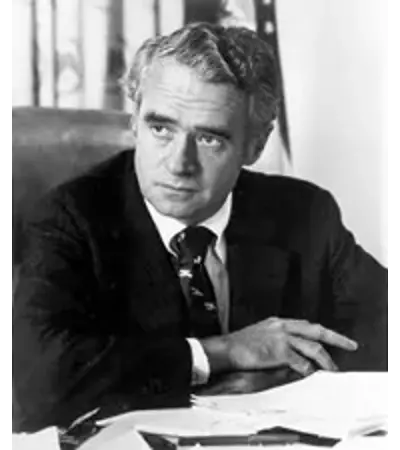
Thomas Francis Eagleton was a United States senator from Missouri, serving from 1968 to 1987. He was briefly the Democratic vice presidential nominee under George McGovern in 1972. He suffered from bouts of depression throughout his life, resulting in several hospitalizations, which were kept secret from the public. When they were revealed, it humiliated the McGovern campaign and Eagleton was forced to quit the race. He later became adjunct professor of public affairs at Washington University in St. Louis.
