Joseph Stiglitz Quotes
Free migration within Europe means that countries that have done a better job at reducing unemployment will predictably end up with more than their fair share of refugees. Workers in these countries bear the cost in depressed wages and higher unemployment, while employers benefit from cheaper labor.
Stiglitz, Joseph E. The Euro: How a Common Currency Threatens the Future of Europe. W. W. Norton & Company, 2016.


This is the classic conservative argument against raising the minimum wage. Historically, if the minimum wage was raised well after there has been a period of wage inflation, there has been little or no negative effect on the lowest paid workers. However, when the minimum wage has been raised during a period of wage stability, there is an effect of making some workers simply not worth the rate that they must be paid. However, even then, after a year or two, the negative effect begins to dissipate.


Henry Ford had more than doubled the market wages of workers and shortened the work day. In his young years he hired Negroes to work on the Assembly line with whites. In his older years he would not when he had become a Hitler and Fascist admiring racist. This was of the Black migrations to Detroit to work in the Auto industry. See {642361} for Ford’s wage announcement.

Ever since the Civil War, there has been an imbalance between the areas of the country with large unemployed populations and those areas where jobs were available. Even in 1870, the authorities were trying to get the unemployed to relocate but this was a hard thing to do at the time—physically, economically, and psychologically. It was not until the 2nd World War when huge numbers of Blacks migrated from areas of poor economic prospects in the South to areas of opportunity in the North. Also, note the classic welfare dilemma expressed whereby if humanitarian assistance is provided, people will not be desperate enough to move to areas with better opportunities.
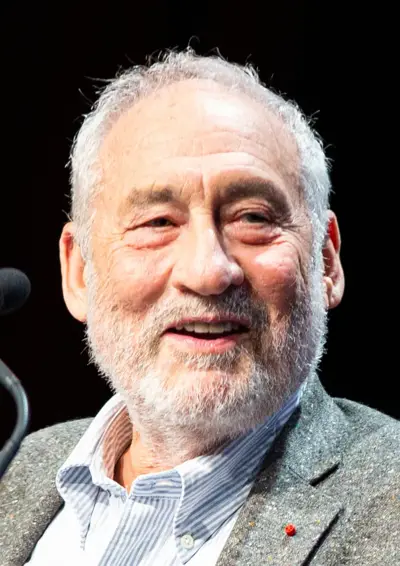
Joseph Eugene Stiglitz is an American economist, public policy analyst, and a professor at Columbia University. He is a recipient of the Nobel Memorial Prize in Economic Sciences (2001) and the John Bates Clark Medal (1979). He is a former senior vice president and chief economist of the World Bank and is a former member and chairman of the (US president's) Council of Economic Advisers. He is known for his support of Georgist public finance theory and for his critical view of the management of globalization, of laissez-faire economists (whom he calls "free-market fundamentalists"), and of international institutions such as the International Monetary Fund and the World Bank.
