Mustafa Akyol Quotes
Foreign journalists writing about Turkey like to focus on the most fundamental divide in Turkish society: the rift between religious conservatives and secularists.
Akyol, Mustafa. "A Break in the Turkish Coalition." The New York Times, 26 Nov. 2013.

From the latter part of the 20th century onward, religious nationalism was no longer a force for most religions and nations except Muslim countries. It was the only religion left where a large proportion of the adherents saw no distinction between the religion and the government. Nations that had separation of church and state were not conducive to the extreme fundamentalist form of Islam where the Secular Leader and the Religious leader was to be embodied as a single person. As a result Islamic religious nationalists argued for a Theocracy and at times fought for it with violent means. The secular government typically, to curtail the violence and prevent a religious takeover, often outlawed the extreme religious Islamic parties. While Aslan cites the Muslim Brotherhood failure in Egypt as a desirable outcome, the only way the other forces of Egyptian society could prevent the Islamists from taking over turning the country into a theocracy was to forcefully repress the extremists. The Turkish outcome was much better, but there was the threat of repression of the Justice and Development Party when it won a majority control of the government. There were explicit threats that if it tried to weaken the secular nature of the government as Ataturk had formulated it, the military would come “out of the barracks” and oust the government as they had done before. There were nations like China which persecuted religions such as certain forms of Christianity, but those religions were not fighting for religious nationalism. They only wished the freedom to practice their religion and had no program or theology that argued for Christianizing the government. The Tamil Hindus of Sri Lanka did not want a Hindu government and were perfectly free to practice their religion. The problem was that they felt that there was systemic social and economic discrimination against the Tamils and they fought for independence—not of a Hindu state, but of a secular, nondiscriminatory state of equal opportunity.

The Ataturk reforms modernized Turkey and turned it into the most modern and democratic of the Islamic countries. However, there were always forces and populist governments that tried to erode the Ataturk reforms—especially secularism.


At the time Turkey was the only Muslim majority country where there was coexistence with secularism but with Christians and Jews as well. Ataturk, the great Turkish leader, turned Turkey around, modernized it, Westernized it, and made it a secular state with freedom of Religion, much like the United States. However, Erdogan’s party was constantly trying to make the state more Islamic as his electoral base were the poor, religious, Muslims.


In Australia, the Liberal Party is a right wing conservative party, unlike England or the United States.


This speech was given in the early days of WWII when it was far from clear that we would win.

Ironically, without the word “wicked” most people would regard the first sentence as a good description of elements of a modern democracy. It illustrates that for the Islamic fundamentalist democracy substitutes the rule of man for the rule of God, freedom of speech allows heresy and blasphemy to to uttered and communicated, and religion which is supposed to inform and direct politics. So what is good for the lover of democracy is the very thing that is bad for Islam. This is not a uniquely Islamic viewpoint. It has been and is held by fundamentalist Christians and Jews as well who would return to Biblical law punishing blasphemy and heresy with death and have religion drive all politics.

Few non-Arab Muslims would publicly admit this historical truth, and at the time this view was shocking to the most religious men in Turkey. However it resonated with many of the average citizens. The entire Arab world had been subject to and controlled by Turkey, and amongst the Turks, the backward Arabs, were not very popular and were historically seen as underdeveloped colonial subjects.

The "we" referred to the Tunisian Ennahda Party of which he was the founder.


This quotation illustrated the extreme polarization between the current fundamentalist Muslims, and the Muslim modernists and the West. Kamal Ataturk, the great leader and stateman who is the father of modern Turkey, is castigated by the author for leading the new Turkish parliament to depose the Caliph – the civil and religious autocrat, one of whom reigned from after the death of Muhammad till his abolishment in 1924. Most of the rest of the world credits Ataturk with being one of the great leaders of all time—one who led a democratic revolution which transformed Turkey into the only Muslim secular democracy, requiring pubic secular European type education for all children, giving women the right to vote (before the U. S. even), adopting a European alphabet and dress, and outlook on life—creating most remarkably a total cultural revolution with virtually no loss of life. No revolutionary leader, before or since has led so extensive a political and cultural revolution, and it was a bloodless revolution. Turkey, into the 21st century, was by far the most powerful, industrialized, scientific and modern nation of Muslims in the world and others were far behind. Yet many Islamic theologian still castigate Atatork for his great achievements as being against the will of God.

Muller warns of a very common error made by most politicians and critics who are faced with populism. To ignore them is also self defeating. Best results seem to come from just calmly present factual counter evidence to whatever is being alleged at the moment. And to acknowledge their right in a democracy to think as they do, but we respectfully disagree. The respect is very important in interacting with populists whose major complaint is most often that they are not regarded with dignity in the society as it now exists. And for many educated, above-average intellect people, there is a difficulty in extending their egalitarian philosophy to those who do not honor, respect or even understand the major tenets and norms of intellectual interaction. In most cases, the politicians who have populist appeal not only treat the people with great dignity and appreciation (feigned or real), but take of the cry for their complaints and suspicions in more eloquent oratory that the disaffected people are able to themselves, and that is a great part of the seemingly magic hold that the populist politician seems to have over his constituency.
Ataturk was one of the few revolutionary leaders who appreciated the importance of maintaining a Republic over time and allowed for the possibility that the revolutionary government might become corrupt. So like Thomas Jefferson, he always told citizens to be ever vigilant. In the case of Turkey, on several occasions fundamentalist religious forces have attempted to regain control of the secular republic and the government and mindful of Ataturk’s warnings the Army and other forces have rallied to keep Turkey independent and secular.
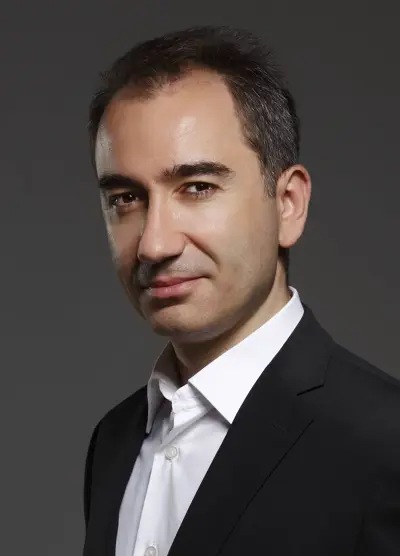
Mustafa Akyol is a Turkish writer and journalist. He is the author of Islam without Extremes: A Muslim Case for Liberty, long-listed in 2012 for the Lionel Gelber Prize, a literary award for the world's best non-fiction book in English. He became a contributing opinion writer for the International New York Times in 2013. He is mainly famous in the western world for his arguments that Islam is highly compatible with classical liberalism and Enlightenment values, and that Islamic practice and the governance of Muslim-majority countries should be reformed along those lines similar to what previously happened in Christian-majority Europe.
