Alfred Thayer Mahan Quotes
For the past quarter of a century, the predominant idea, which has successfully asserted itself at the polls and shaped the course of the government, has been to preserve the home market for the home industries. The employer and the workman have alike been taught to look at the various economical measures proposed from this point of view, to regard with hostility any step favoring the intrusion of the foreign producer upon their own domain, and rather to demand increasingly rigorous measures of exclusion than to acquiesce in any loosening of the chain that binds the consumer to them.
This historical quotation shows us that the nation under Republican control at the end of the 19th century was highly protectionist. In addition. It shows us how a party can flip flop on its most cherished principles. A century later, free trade was the cornerstone of Republican philosophy and opponents who held to the Republican 19th century principles were accused of being detriments to the American growth and economic system.
Alfred Thayer Mahan, 1840-1914, U. S. Navy Admiral & writer on naval affairs, “The United States Looking Outward”, The Atlantic Monthly, December 1890
Sourced by: Eigen's Political and Historical Quotations


It is interesting that the first national women’s political party was a strong advocate of protectionism and saw free trade as an unfair hurdle for mostly male workers. At the time, the Republicans were staunch protectionists, and the Democrats, the free traders thus illustrating that the major parties continuously flip-flop on major issues.

Republicans at that time were adamant protectionists and were violently opposed to free trade. They made a total flip flop on free trade after the Second Word War when the industrial capacity of all of the major industrial nations except America was completely emaciated. America still had production and there was huge money to be made from being the only nation that could deliver goods to the world. Meanwhile Germany, France, England, and Italy, our largest competitors could hardly manufacture for their own needs and could not compete in the American market. So the American corporations then wanted to become free traders.


A self-contained market would be one in which a country only makes products that it sells within its borders, and only sells products that in makes in the country. Very primitive cultures were self-contained markets, but trading generally takes place whenever two cultures interact unless politicians artificially prevent it.


1st Earl of Beaconsfield

At the time, Republicans were the protectionists and Democrats were free traders—the reverse of the party roles at the end of the 20th century and the beginning of the 21st.


Ruffin is more widely known as the man who fired the first shot of the Civil War.


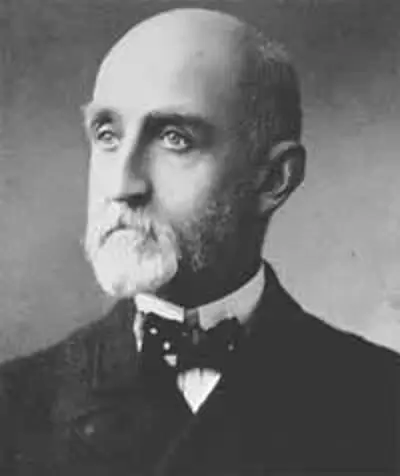
Alfred Thayer Mahan was a United States naval officer and historian, whom John Keegan called "the most important American strategist of the nineteenth century." His book The Influence of Sea Power Upon History, 1660–1783 (1890) won immediate recognition, especially in Europe, and with its successor, The Influence of Sea Power Upon the French Revolution and Empire, 1793–1812 (1892), made him world-famous and perhaps the most influential American author of the nineteenth century.
