Elizabeth Blackburn Quotes
For me, arguably the story of telomeres and telomerase began thousands of years ago, in the cornfields of the Maya highlands of Central America.
Blackburn, Elizabeth H. "Telomeres and Telomerase: The Means to the End." Nobel Lecture, 7 Dec. 2009, NobelPrize.org, Nobel Prize Outreach AB.


Venter developed an entirely new method of finding new species and hence new genes by collecting water samples from all over the world and using computers to catalog all the life forms and determine whether or not each is new and then isolating the genes if unique. As a very wealthy business man he had a personal sailing yacht which he turned over to graduate students and young scientists who then sailed much of the world taking indiscriminate samples, preserving them and sending them back to Venter’s computer bank for analysis. The cost per gene and specie discovered was amazingly small as it was an industrialization of finding new life forms.


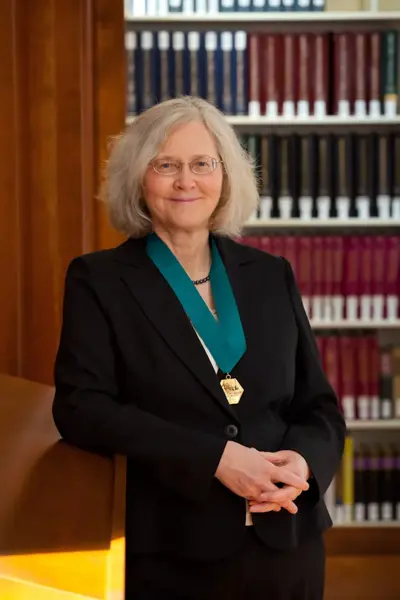
Elizabeth Helen Blackburn, AC FRS FAA FRSN is an Australian-American Nobel laureate who is the former President of the Salk Institute for Biological Studies. Previously she was a biological researcher at the University of California, San Francisco, who studied the telomere, a structure at the end of chromosomes that protects the chromosome. In 1984, Blackburn co-discovered telomerase, the enzyme that replenishes the telomere, with Carol W. Greider. For this work, she was awarded the 2009 Nobel Prize in Physiology or Medicine, sharing it with Greider and Jack W. Szostak, becoming the first Australian woman Nobel laureate. She also worked in medical ethics, and was controversially dismissed from the Bush Administration's President's Council on Bioethics.
