Lord Acton Quotes
For centuries it was never discovered that education was a function of the State, and the State never attempted to educate. But when modern absolutism arose, it laid claim to everything on behalf of the sovereign power....When the revolutionary theory of government began to prevail, and Church and State found that they were educating for opposite ends and in a contradictory spirit, it became necessary to remove children entirely from the influence of religion.
Acton, John Emerich Edward Dalberg. "The Protestant Theory of Persecution." The History of Freedom and Other Essays, Macmillan and Co., 1907, p. 182.


1st Earl of Beaconsfield. This is one of the favorite quotations of those who oppose a strong federal role in education.


England did not follow this precept but the United States did and is the only country that did. In all others, education is controlled by the national government. However, Godwin's principle of separating education from government is not maintained in all the states of America. In many, the State government leaves much of the curriculum and the operations of the school to local school boards which have a great deal of discretion. However, in most of the Southern States, the State government dominates and controls education and relatively little is left to the school boards. In some the State chooses the allowable textbooks. In those cases, Godwin's principle is violated, but in most of the North East and Midwest and some of the far West the school boards have great autonomy and Goodwin's principle is upheld. It is fascinating that the more control a particular state exercises of the schools, the poorer the performance of the schools of that state. Goodwin had a terrific insight.

At the time the Colonial British Government controlled the Indian Educational System. Kahn and a few others thought that the Indians should take control of their own educational systems.

Radical as this idea then was, it actually came to pass in Italy and almost all of Europe. In Mexico, the reaction against church property was so great that religions may not even own the ground on which their churches stand.

One of the major problems in the Palestinian Territory is that a very large proportion of the population is armed with automatic assault weapons. Minor disputes end up with deadly killings and political disputes often result in major shootouts. He argues that it is the government alone that should have the monopoly on weapons and arms.


This was an amazingly controversial quotation. At first glance it seemed like a typical position that a very conservative, anti-government politicization might take—the government should not interfere with a parents bringing up their children. However, there was a more ominous part of the quotations. While everyone in America would certainly agree with Paul that the Government does not “own” the children, there are few who would agree with the point that follows—that the Parents “own” the child. Paul reveals the normally hidden aspect of his politics—that he is highly influenced by the extreme, Biblical Literalist Fundamentalist Christians and Jews. In the Old Testament, the Father really did OWN the child. The latter was his chattel. A father had the legal and duty-bound power of life and death over his children. Most American Christians and Jews have long since abandoned the literal biblical notion of children being owned by a father and today see a child as a person who can sometimes need the protection of the state just like any other citizen. And there are occasions where the child must be PROTECTED from the parents who may be acting within their fundamentalist notions of Biblical rights and duties, but not with their civil rights and duties. Ownership, of a child is not one of the modern civil rights of parents.


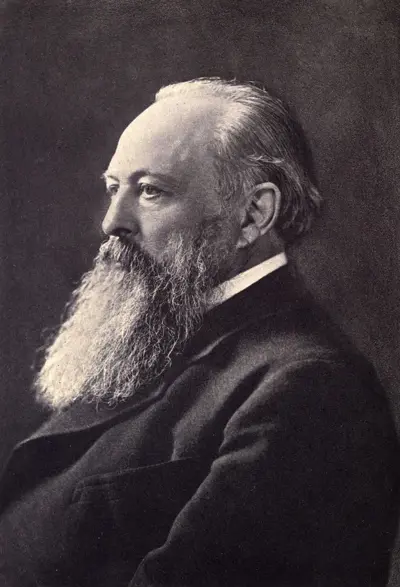
John Emerich Edward Dalberg-Acton, 1st Baron Acton, 13th Marquess of Groppoli, better known as Lord Acton, was an English Catholic historian, politician, and writer. He was the only son of Sir Ferdinand Dalberg-Acton, 7th Baronet, and a grandson of the Neapolitan admiral and prime minister Sir John Acton, 6th Baronet. Between 1837 and 1869 he was known as Sir John Dalberg-Acton, 8th Baronet.
