Bernard Baruch Quotes
Financial storm definitely passed.
Baruch, Bernard M. Telegram to Winston Churchill, 15 Nov. 1929. Quoted in Gilbert, Martin, Winston S. Churchill: The Prophet of Truth, 1922-1939, Houghton Mifflin, 1977, p. 354.


This is one of the worst economics assessments in the nation's history. Hoover had been a very successful business man prior to his government experience, but good business experience has not been a good predictor of Presidential success. See {633214} for more on this point.

He foresaw the stock market problems of the Great Depression and was pushing the Federal Reserve Bank to act as the Hoover Administration was philosophically opposed to any government involvement. Strong died before the Fed could do anything and the last chance to stave off the Depression died with him.


The Stock Market went up slightly as a result of his efforts.

There was. President Hoover and his aids were not the only ones to underplay the stock market crash of 1929.


The result was regulation of the banks and the creation of the SEC to regulate the stock market, However, over the years, the regulations were not able to keep up with the sophisticated development of new forms of investments and financial instruments and the financial industry were able to speculate with other people’s money in ways that FDR and his reformers never imagined. Finally, even the regulation that did exist was weakened by the policies of the George W. Bush administration and the combination brought about the Great Recession of 2008 where the profits from excess speculation were privatized and the losses, socialized with the taxpayer and the American worker bearing the brunt while most of the speculators were bailed out and made more money than ever. The Obama administration tried to reform the situation, but was unable to put an end to the legal speculation with other people’s money or of having institutions that were “too big to fail.”


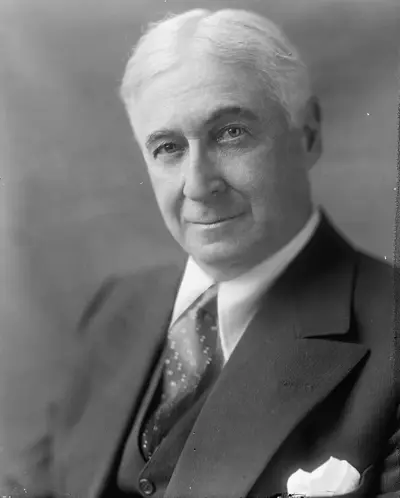
After amassing a fortune on the New York Stock Exchange, he impressed President Woodrow Wilson by managing the nation's economic mobilization in World War I as chairman of the War Industries Board. He advised Wilson during the Paris Peace Conference. He made another fortune in the postwar bull market, but foresaw the Wall Street crash and sold out well in advance. In World War II, he became a close advisor to President Roosevelt on the role of industry in war supply, and he was credited with greatly shortening the production time for tanks and aircraft. Later he helped to develop rehabilitation programs for injured servicemen. In 1946, he was the United States representative to the United Nations Atomic Energy Commission, though his Baruch Plan for international control of atomic energy was rejected by the Soviet Union.
