Paul Berg Quotes
Fears of creating new kinds of plagues or of altering human evolution or of irreversibly altering the environment were only some of the concerns that were rampant.
Berg, Paul. "Asilomar and Recombinant DNA." NobelPrize.org, Nobel Media AB, 26 Aug. 2004.


Gore who generally was a progressive on almost all issues, was quite conservative when it came to human genetic manipulation and cloning. Scientists for whom Gore was a favorite politician based on his leadership of digital technology and the Internet and his Nobel prize winning work on environmentalism, but his stance in this quotation was puzzling to many.


What he thought was conceivable in the 1970’s seemed almost certain to come to pass 30 years later. Scientists had already altered the evolution of various plants and animals, and the complete human genome had been sequenced. The question will be not whether man will be able to control and modify his own evolution, but how should this be done and who should decide it. We have realized that man has already—unintentionally—altered the evolution of many species from passenger pigeons which are now extinct and the dog which coevolved with humans. Arguably, man’s development of the ability to control his own evolution is an evolutionary development itself. One great question for society is whether it is better to alter evolution unknowingly or in a planned, relatively controlled manner. For man to participate in the design of human evolution will be the nightmare of the Creationists who insist that evolution is too complicated to be somewhat of a random process and that there must be a designer who they assume is God. When man becomes the designer, that will be very disturbing. For most theologians, there will be little difficulty with the notion that God chose the mechanism of evolution and chose humans to give the intellect and knowledge to implement and design the evolutionary process.


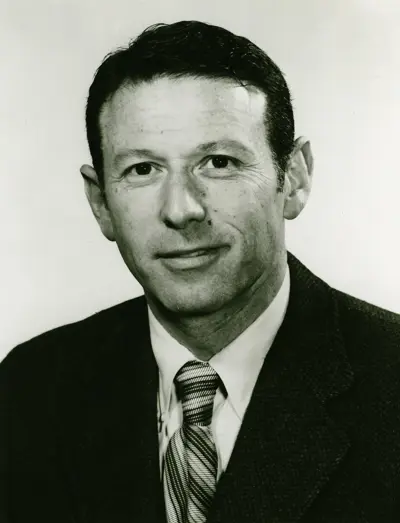
Paul Berg is an American biochemist and professor emeritus at Stanford University. He was the recipient of the Nobel Prize in Chemistry in 1980, along with Walter Gilbert and Frederick Sanger. The award recognized their contributions to basic research involving nucleic acids. Berg received his undergraduate education at Penn State University, where he majored in biochemistry. He received his Ph.D. in biochemistry from Case Western Reserve University in 1952. Berg worked as a professor at Washington University School of Medicine and Stanford University School of Medicine, in addition to serving as the director of the Beckman Center for Molecular and Genetic Medicine. In addition to the Nobel Prize, Berg was presented with the National Medal of Science in 1983 and the National Library of Medicine Medal in 1986. Berg is a member of the Board of Sponsors for the Bulletin of the Atomic Scientists.
