Paul Collier Quotes
Farm subsidies are a waste of money.
Paul Collier, Director, World Bank Development Group, Interview, Foreign Policy, May/June 2011
Sourced by: Eigen's Political and Historical Quotations

For many nations, it is an important objective to be totally self-sufficient in their food supply—so that they would not have to depend in other nations in what might be a world famine or food supply. For those nations agricultural subsidies are useful if their farmers cannot produce as cheaply and efficiently as other nations do. In the United States, with the most efficient agriculture in the world, subsidies are a waste of public money {633243} and the result of lobbying and special interest pressure and or corruption {633245}.

Actually, the Agriculture Department was one of Lincoln’s greatest achievements. The subsidies and corporate welfare came much later. The biggest benefits were the land grant collages where agricultural research improved the yields and productivity and the Agricultural Extension provided training and technical assistance to American farmers making the United States the most efficient agricultural producer in the world. The subsidies and corporate welfare had and has nothing to do with the positive initiatives that Lincoln envisioned.


The House had been debating an agricultural subsidy bill. Family farmers had in certain years not been able to sell their produce for the cost of growing it and subsidies made up the difference. But in this particular year, farm prices were very high and the agricultural subsidies were “welfare for the rich.” Farmers who earned over a million dollars in a great agricultural year would get “subsidies.” Typically members of Congress were either opposed to agricultural subsidies or opposed. Congressman Kind had a more nuanced view.


America and several other nations object to the European Community agricultural subsidies in that they are an illegal trade practice under GATT to which all European nations are signatories. However, the US also makes agricultural subsidies but not to the same extent,


Despite developed nation calls for free trade, The US, EEC and Japan maintain an extensive system of agricultural subsidies which are politically difficult to eliminate while expecting developing nations to eliminate their protectionist practices.


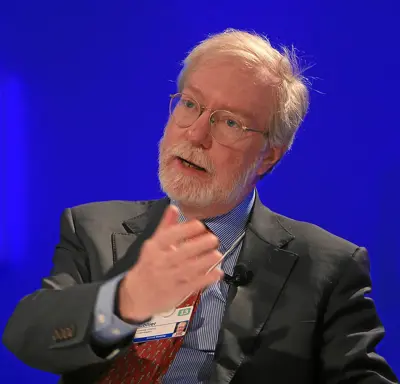
- Born: April 23, 1949
- Nationality: British
- Profession:
Sir Paul Collier, CBE, FBA is a British development economist who serves as the Professor of Economics and Public Policy in the Blavatnik School of Government and the director of the International Growth Centre. He currently is a Professeur invité at Sciences Po and a Professorial Fellow of St Antony's College, Oxford. He has served as a senior advisor to the Blair Commission for Africa and was the Director of the Development Research Group at the World Bank between 1998 and 2003.
