Saint Ambrose Quotes
Faith comes not by compulsion, but it is a matter of free choice; therefore, no one has the authority to compel anyone else in such matters, nor to coerce him with new laws
Saint Ambrose, 339-397, Bishop of Milan, Governor of Aemilia-Liguria, Quoted in Caspar Schwenckfeld von Ossig, A Discourse on Freedom of Religion, Christian Doctrine, Judgment, and Faith
Sourced by: Eigen's Political and Historical Quotations

Quintus Septimius Florens Tertullianus


In the American system, we do not oppose any religion. We do oppose the right of any religion to use the power of the state and governments to compel or use government resources to promote or subsidize their religion. Other countries have established churches or a national religion. In that sense, some religions perceive America objects to their religion because we do not make it our established religion. Opposing prayer in public schools is not opposing prayer. It is only opposing prayer in that specific context where all payers are paying including the non believers in that particular religion.


Spinoza’s ideas were considered so radical and dangerous that he was the only man in history who was excommunicated by the Catholics, the Jews and the Muslims.


This quotation is important because it emphasizes an aspect of freedom of religion that is not usually discussed—the freedom to LEAVE a religion. As an Islamic reformer born in Iran, this notion is extremely important. Under Sharia—Islamic Law—capital punishment is required for anyone who converts from Islam to any other religion. This has been made a part of the civil law of many Islamic nations from Afghanistan to Saudi Arabia as well as Iran where Sharia IS the civil law. There is no other religion in the world which makes conversion away from the religion a capital crime requiring execution. Executing people who leave a religion is a major violation of the Universal Declaration of Human Rights.

Despite his recognition of this point, he too became an advocate of murdering religious opponents.


Pen name: Jack Nipps

Prior to Vatican II, freedom of conscience was not explicit in Catholic Doctrine. The controlling view had been that of Pope Pius IX a hundred years earlier. See {612299}.


Henry of Navarre. The practice of kidnapping children from parents of the other faith and baptizing them was rampant.


The wording was rejected and the delegates insisted upon the original proposed language: “Well aware that Almighty God hath created the mind free …” This is a very important historical quotation because it shows that Henry and a few others wanted to make the society Christian centric, However, the majority insisted that it be non-sectarian. Many of the delegates rejecting the “Jesus Christ” language were themselves practicing Christians, but they were aware of the terrible religious wars and strife in Europe and between Christians and Muslims as well as the persecution of Jews, Quakers, and other sects; they did not want that in America so they rejected the idea of an established Christian Church or culture.

Jews were forced to convert to Catholicism under penalty of death. While the archbishop did not approve, he did not describe the murders in moral terms or used his great religious power to stop the practice.


Backus was the first of the American clerics to espouse the position that in order for there to be a Christian nation, the state must be separate from the Church.


The modernity of this ancient leader is striking. For another example see his view on the importance of engendering supportive public opinion: XXX
Quintus Septimius Florens Tertullianus. This quote is historically very important as it is one of the first expressions of religious tolerance. Tragically, this principle was ignored by most Christians for over a millennium. Some Christians still ignore it. See {626754} for a modern example.
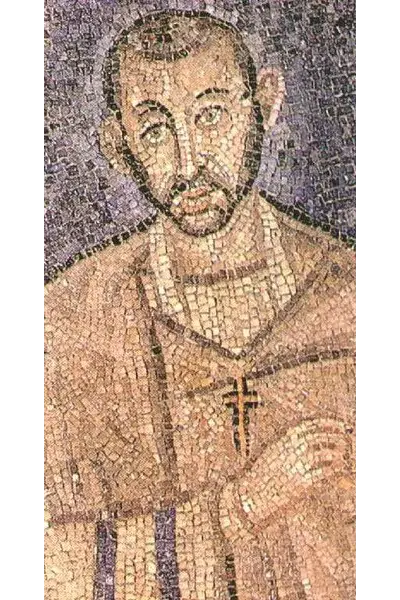
Ambrose of Milan (born Aurelius Ambrosius; c. 340 – 397), venerated as Saint Ambrose, was the Bishop of Milan, a theologian, and one of the most influential ecclesiastical figures of the 4th century.
