Alan Greenspan Quotes
Everybody trades off in some sense or another.
Alan Greenspan, Chairman, Federal Reserve Board, Testimony, Senate Budget Committee Hearings, January 25, 2001
Sourced by: Eigen's Political and Historical Quotations


Samuel Langhorne Clemens, 1835-1910


While it is true that there is a powerful minority of Palestinians and Palestinian organizations—Hamas & Hezbollah, for example whose official position is that there must be no compromise with Israel and Jews must be killed unless they convert to Islam, there are ultra-orthodox, religious, Jewish groups who believe that all the land in dispute was given to the Jews by God and there can be no compromise. The majority of Israelis believe that there is no Palestinian leadership who can stand up to the powerful minorities. The majority of Palestinians believe that the Israeli governments will never stand up to thieir powerful minorities. The Israeli Prime Minister was trying to signal the Palestinians, that if they compromise, the Israelis will also, but neither side has a lot of credibility when it comes to land, borders, and religious identity and that is especially true of this Israeli Prime Minister, who many Israelis (and many Americans) doubt that he will compromise on the land and borders with all the Israeli settlers already inhabiting enclaves of what is, by every law (International, Israeli, and traditional Arab—with the exception of God’s law of the Old Testament—which agrees that the Israelis or the Jewish People do not have title to or control over the lands outside of Israel proper.


The reaction of the Kennedy team was very negative to the Russian Proposal with the exception of John McCone who agreed with Kennedy. See {634568}. Neither side had great intercontinental ballistic missile capability at the time, and we had placed a large battery of missiles in Turkey very close to the Russian border. This gave the U. S. a major military advantage. We could deliver many more nuclear warheads to Russia than they could to the United States. The Russians with this proposal hoped to even the capability. The military advisers and the security and State Department advisors all thought that the U. S. should not give up its nuclear superiority. However, we had no international legal basis for denying the Cubans the right to locate any weapons on their soil, so to prevent the Communists from having nuclear missiles in Cuba we would have to use force which could easily escalate into a nuclear war. Kennedy and McCone both thought that since we had intercontinental ballistic missiles in production and coming on line and would not need the Turkey Missiles to strike all over Russia. So giving up our missile advantage for a short time would not expose us to any undue risk. The other advisors worried that the production of the ICBMs could be delayed—weapons systems were (and are) notoriously longer in production than estimated or planned. They also thought that the morale of the military and civilian population would suffer when they learned that we had given away our military advantage. There was a macho element in their thinking in that we would be giving in to intimidation and look like we were afraid to fight. Last, the political advisors thought that the right wing hawks would pillory the administration for its cowardice in allowing itself to be intimidated by the Russians. Their doctrine was that when faced with force, the Communists will always back down. In the final deal we agreed to remove our missiles from Turkey in 6 months and this would be done in complete secrecy and the Russians would keep the deal secret. That way, Kennedy got 6 more months of production which turned out to have been enough. The public would never know till years later and the Conservatives would not be able to publicly castigate Kennedy. Meanwhile, the conservatives would continue to believe that the Russians backed down in the face of force—the naval blockade as this was ‘proved’ their doctrine when the Russians had not backed down at all. The strategy and tactics of the Kennedy administration are still analyzed and argued about today with many Americans just realizing that we did not intimidate the Russians with force or the threat of force to remove their Cuban missiles.

In dos nations there are people who will reject any negotiated deal in which they do not get everything that they want. Some even will characterize the deal as a sellout or treason. But to be successful the diplomats from both sides must feel that they have gotten enough so that they can persuade their countrymen and political authorities that the nation has gotten enough to make the deal worth while.


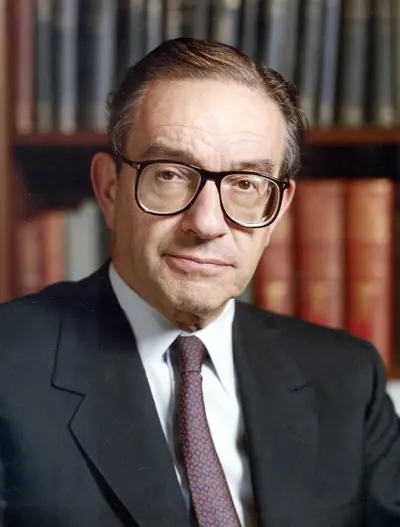
Alan Greenspan is an American economist who served five terms as the 13th Chair of the Federal Reserve of the United States from 1987 to 2006. He works as a private adviser and provides consulting for firms through his company, Greenspan Associates LLC. First appointed Federal Reserve chairman by President Ronald Reagan in August 1987, he was reappointed at successive four-year intervals until retiring on January 31, 2006, after the second-longest tenure in the position (behind William McChesney Martin).
