Paul Fussell Quotes
Every war is ironic because every war is worse than expected. Every war constitutes an irony of situation because its means are so melodramatically disproportionate to its presumed ends.
Fussell, Paul. The Great War and Modern Memory. Oxford University Press, 1975, p. 7.


Lee was trying to negotiate a peace treaty as a part of his his potential surrender. However, Grant would not be drawn into that, Lee was NOT the government of the Confederacy, and Grant had served with him earlier in the Mexican War and knew he was not a fanatic on teh subject of slavery and race as most of the Southern leaders were. They werenthe ones who would have to be captured or driven to surrender. Grant could have gotten authoirioty as he was in almost real time contact with President Lincoln by telegraph. However, neither wanted to negotiate peace with Lee. Instead, Grant gave Lee and his men incredibly gracious termsof surrender which he and Lincoln hoped would casue the avarage Southern soldiers to feel better about surrender for although Lee's was the largest Confederate Army, there were still others out there that had to be dealt with,


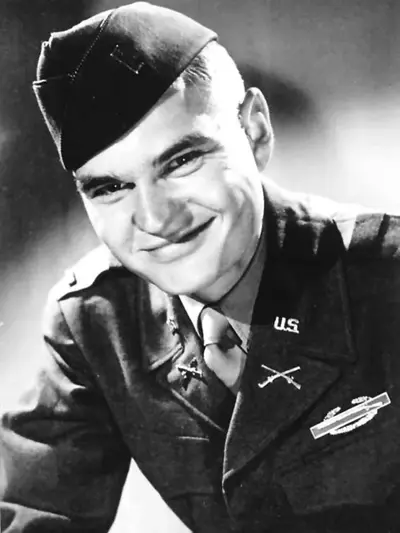
Paul Fussell, Jr. was an American cultural and literary historian, author and university professor. His writings cover a variety of topics, from scholarly works on eighteenth-century English literature to commentary on America's class system. Fussell served in the 103rd Infantry Division during World War II and was wounded in fighting in France. Returning to the US, Fussell wrote extensively and held several faculty positions, most prominently at Rutgers University (1955–1983) and at the University of Pennsylvania (1983–1994). He is best known for his writings about World War I and II, which explore what he felt was the gap between the romantic myth and reality of war; he made a "career out of refusing to disguise it or elevate it".
