Wayne L. Morse Quotes
Ever since 1954, when the United States did not sign the Geneva accords but instead started down the road of unilateral military action in South Vietnam, we have become a provocateur of military conflict in Southeast Asia and marched in the opposite direction from fulfilling our obligations under the United Nations Charter.
Wayne L. Morse, 1900-1974, U. S. Senator (Republican & Independent, Oregon), Senate Debate, August 5, 1964
Sourced by: Eigen's Political and Historical Quotations


sending American troops to Vietnam


Chomsky was not asserting this statement as the truth. He was making the statement assuming that the absurdity of it would be clear to the listener and they would also realize that was what the then government policy was. North Vietnamese had infiltrated the South and had much support in many of the South Vietnamese villages. When the U. S. bombed the North Vietnamese—and the Vietnamese inhabitants—of those villages, the intention was indeed to help the South Vietnamese. If Chomsky were a politician running for office, his opponent might well have taken this quote and used it to “prove” that Chomsky supported the American effort in the Vietnam War when he was a vehement opponent.

When the United Nations partitioned Palestine into separate Jewish and Muslim states, the armies of all the Arab countries attacked the new nation which did not even have a formal Army. The Israelis were able to win the war.


The claims of the President that Hussein even had weapons of mass destruction were untrue. Eagleburger’s criteria for war would have been even more stringent as is clear in this quotation. Foreign affairs experienced members of the President’s own party tried to dissuade him from this disastrous plan of invading Iraq but were unable to.


Later, when he ran for the Democratic Presidential Nomination had had changed his mind and was a major opponent of the Vietnam War. This was the pattern of so many Americans whose first instinct was to support the government’s decision to wage war, and over time grew disenchanted with the war and ended up opposing the war actively.


The United States position was that United Nations approval is not required when it is acting to defend itself as the United Nations Charter gives every nation the unilateral right of self defense. America justified the action on the ground that the Iraqis were in violation of the UN resolution regarding weapons of mass destruction and if Iraq had or was developing such weapons, the United States would be a likely target and the Iraq leadership had already called for death and destruction to America so their intention was clear. No such weapons were found.

The George W. Bush Administration told Congress and the people of the world that Iraq had developed weapons of mass destruction and were about to deploy them. We invaded Iraq and it turned out that there were no WMD’s in Iraq. No one knows if the all in the administration honestly believed the intelligence, how many doubted it, and how many others suppressed contradictory evidence of which there was much. Some members of the administration wanted an invasion of Iraq for other reasons, personal and economic.

The quotation is notable as it illustrates the great difficulty that modern democracies have with extreme Islamic fundamentalists. Their very perception and world view is so different that often we think of the extremists as insane and they often feel the same way about us.


John E. Puerifoy, the American ambassador to Guatemala


Nasser was indeed planning an attack. Israeli intelligence had discovered it, and the Israeli’s informed President Lyndon Johnson who in turn called Kosygin. Nasser and the Arabs had miscalculated again and ended up being not only defeated in the war they wanted but totally embarrassed by the incredibly poor performance of the Arab armies who greatly outnumbered the Israelis but had no stomach for a fight.
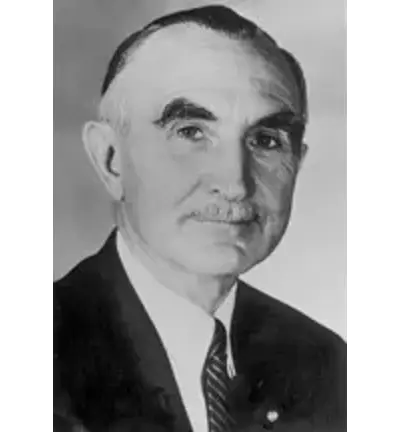
Wayne Lyman Morse was an American attorney and United States Senator from Oregon. Morse is well known for opposing his party's leadership and for his opposition to the Vietnam War on constitutional grounds.
