William Easterly Quotes
... even political opponents of evil governments show little gratitude for American invasion to modernize them..
William Easterly, Economist and Writer, Co-Director, NYU Development Research Institute, The White Man's Burden, 2006
Sourced by: Eigen's Political and Historical Quotations


She was referring to the aftermath of the Iraq War.


The Vice President was one of the architects of and advocates for the Iraq War. To garner public support he (and the others supporting the war) claimed that Iraq had developed weapons of mass destruction and made a serious of predictions about the war. He was wrong on all counts. There were no WMDs, none were even being developed, and we needed hundreds of thousands of troops for a decade as we were not greeted as liberators but the vast majority of our casualties and deaths in Iraq came after the invasion was successful and the population showed very hostile to U. S. occupation and our governing policies.


This concept of Total War turns out to be the only way to bring many conflicts to an end. Sherman was hated by generations of Southerners because he appeared to be vengeful to humble the Southern pride and spirit. But actually, Sherman was not personally vengeful at all and respected the South and understood its point of view more than most in the North. However, he was one of the first of the Western World’s military leaders to realize that with modern warfare and the then modern weapons, the only way to win a war was to persuade the enemy to stop fighting and if they refused, as the South kept doing, the only rational and humane course was to end the war as swiftly and totally as possible.


Mullahs are Muslim Clerics who at the time controlled Iran which was a Fundamentalist, Islamic Theocracy.

Emerson was right on both points. It was the first U. S. foreign policy effort where invading and conquering a country was much easier than dealing with it afterward.

Despite the fact that there were no formal political polls at the time, public opinion was very influential in curtailing what might be a tendency to use of the American military. Starting with the Cold War later, Presidents tended to use American military force regardless of public opinion or would exaggerate or lie (Vietnam and Iraq wars for example) to temporally gain some public support.

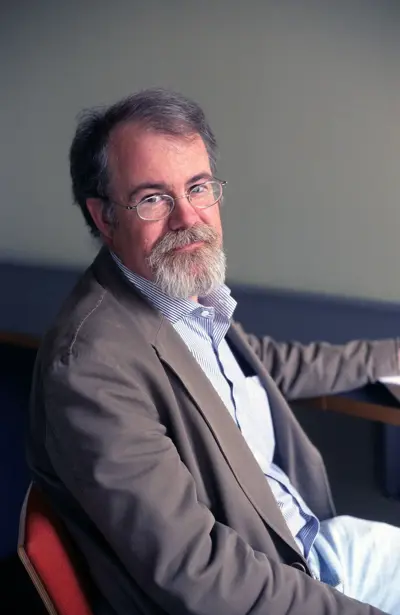
William Russell Easterly is an American economist, specializing in economic development. He is a Professor of Economics at New York University, joint with Africa House, and Co-Director of NYU’s Development Research Institute. He is a Research Associate of NBER, senior fellow at the Bureau for Research and Economic Analysis of Development (BREAD) of Duke University, and a nonresident senior fellow at the Brookings Institution in Washington DC. Easterly is an associate editor of the Journal of Economic Growth.
