Uesugi Kenshin Quotes
Engage in combat fully determined to die and you will be alive; wish to survive in the battle and you will surely meet death.
Uesugi Kenshin, Japanese Samurai Warlord & Ruler of Echigo Province, Quoted in Daisetz Teitaro Suzuki; Zen Buddhism and Its Influence on Japanese Culture
Sourced by: Eigen's Political and Historical Quotations


It was then customary to return with the head of a killed Samurai which would be made up as if in life so the dead man could be recognized. That way, the victor received more recognition with the importance of the Samurai who he defeated.


An example of this was the landing in the beaches of Normandy in WWII. Once on the beaches the allied troops had to win or die. Some of the most heroic fighting in American and English military history occurred on those beaches. Another was the Spanish Explorer Hernando Cortez who after landing in the New World, had his ships burned so that he and his soldiers had to conquer or they would die.
His documentation of Bushido—the way of the warrior—has influenced Japanese culture and behavior even into modern times. This statement in large part explained the behavior of Japanese troops in WWII. Surrender was considered cowardice and therefore fighting to the death was required of all Japanese. This particular work was studied by American experts on Japan and the assumption that this was the Japanese cultural imperative for soldier and civilian alike, was one of the major factors leading Truman and America to use the Atomic bomb in WWII for they did not anticipate any Japanese surrender otherwise and an invasion of the Japanese mainland would have killed more Japanese and many Americans as well. Even after the first atomic bomb on Hiroshima, the Japanese would not surrender and it took the Emperor to finally contradict the Japanese culture as stated in Yamamoto Tsunetomo’s writing. See also {586232}.


The Muslims conquered Spain and controlled it to one extent or another for 600 years.

Drumbo was morally opposed to war. He also refused to name Hollywood communists to Congressional Committees during the Red Scare. He was then blacklisted from his occupation, screen writing.


Attila the Hun. The Romans aided by Theodoric, King of the Visigoths, fought the Huns in the only battle that Attila ever lost which he lost badly. There were 165,000 men killed in an afternoon. The Roman General, Flavius Aetius, had been a boyhood friend of Attila’s and had fought with him against the Visigoths. The Romans had Attila trapped but his old friend let him escape with just a good thrashing to his ego and army as to not upset the balance of power and tilt it in favor of the Goths. Roman foreign policy at the time was to keep all the Barbarians strong enough to fight one another so that none would be dominant but all weaker than Rome. Divide and conquer.

This statement is perhaps the greatest and most eloquent description of the United States exceptionalism and its behavior in WWII. Such a statement could only come from a non-American.


The Chinese were massacred when the Japanese invaded with atrocities against civilians that were inconceivable until Hitler began his in Europe. However, there were many Chinese we worked against the Japanese including the Communists who made a truce with Chiang (see {636322}) so that they could oust the Japanese invaders.

Eisenhower was then the Supreme Allied Commander of the Allied Forces.

This quotation gives us a concept of the WWII home front effort where virtually everyone in American society was personally involved on a daily basis in the war. See also {637440}. This was so dramatically different from the home fronts for the wars in Afghanistan and Iraq where most of the American public had no direct contact with the war effort and was not called upon or even needed to do anything.

This was the exact political logical scenario that German socialist Bebel had predicted a few years earlier--{642075}. “Hectacomb” was an ancient Greek term referring to the public sacrifice of the blood of 100 oxen. It developed a more generalized meaning referring to making a very large human sacrifice of life for a national purpose.

It was this code, and its implementation in Saipan, Okinawa, and other Japanese held islands taken by the allies that caused Japanese soldiers to fight to the death or commit suicide. The prospect of this code being followed by Japanese soldiers, civilians or both in an invasion of the Japanese mainland, was one of the major arguments in favor of dropping the Atomic Bomb in World War II.
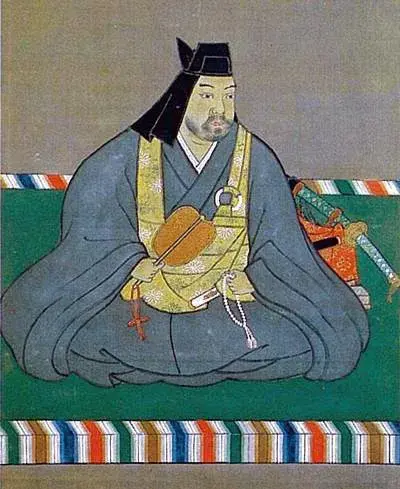
Uesugi Kenshin was a daimyō who was born as Nagao Kagetora of the Nagao clan, and after adoption into the Uesugi clan, ruled Echigo Province in the Sengoku period of Japan. He was one of the most powerful daimyōs of the Sengoku period. Known as the "Dragon of Echigo", while chiefly remembered for his prowess on the battlefield, Kenshin is also regarded as an extremely skillful administrator who fostered the growth of local industries and trade and his rule saw a marked rise in the standard of living of Echigo.
