Jack Keane Quotes
'Duty' is a refreshingly honest memoir and a moving one. Mr. Gates scrupulously identifies his flaws and mistakes: He waited too long, for example, for the military bureaucracy to fix critical supply issues like the drones needed in Iraq and took three years to replace a dysfunctional command structure in Afghanistan.
Keane, Jack. "The Wars He Waged." Review of Duty: Memoirs of a Secretary at War, by Robert M. Gates. The Wall Street Journal, Dow Jones & Company, 10 Jan. 2014.

Written when he was forced to share command with General Francois Kellerman.

Although the two men differed on a very important issue, each admired the other and acquitted themselves politely throughout. Congress explicitly gave the President the powers that he had exercised and won the dispute. But Dixon had also won, and upheld the law as it existed until it was changed.


Connecticut’s militia had the large contingent of British Troops outside of Boston to their North and the extensive British military to their South in New York City. So there was no where they could maneuver without running into overwhelmingly superior British Forces.


The President told McNamara that if the administration does not send the troops the Generals want, they will be blamed for any military failures that occur. If they do send all the troops that the Joint Chiefs wanted, they would be going far beyond the limits that the Defense Secretary recommended and the President would have preferred. JBJ felt he really had no political choice. He authorized the wanted troops further escalating the war. See his special assistant’s question about that decision in {617151}.


His concern was well placed. For over half a century thereafter, the tail did wag the dog, and while there have been many successful covert operations, the risk and current pressure siphoned off talent and management attention from intelligence—the Central Intelligence Agency’s primary job.

He was very aware that there were three factors inhibiting staff members from speaking up to criticize a plan: Junior officers a reluctant to take a position that is in opposition to their superiors; many attendees see themselves as institutional representatives of their organization or sub organization and are reluctant to take a position different from that which was taken by the organization; after months of planning and the vast majority of other staff in support of a plan, most people are intimidated from raising a dissident point of view especially if they are the only one in the group with that view. Presidents, agency heads, commanders, and other leaders all face this problem. However many do not want any dissident opinions at the late stages of a planning process. The better leaders however do want those outlier opinions especially at the later stages. Eisenhower usually went out of his way to emphasize his desire for honest criticism and chided others who did not like criticism—see {637081} ,


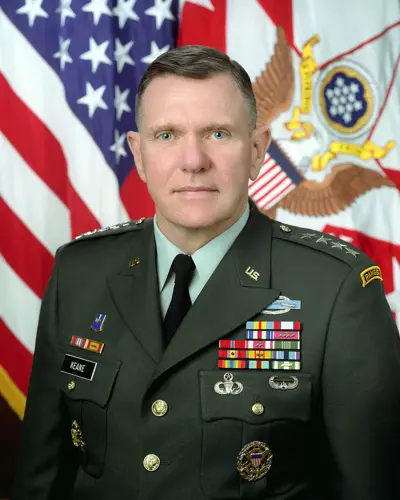
John M. "Jack" Keane is a retired American four-star general, former Vice Chief of Staff of the United States Army and Presidential Medal of Freedom recipient. He is a national security analyst, primarily on Fox News, and serves as chairman of the Institute for the Study of War and as chairman of AM General.
