Constance Baker Motley Quotes
Doing away with separate black colleges meets resistance from alumni and other blacks.
Motley, Constance Baker. Equal Justice Under Law: An Autobiography. Farrar, Straus and Giroux, 1998.


Following the lead of Arkansas, many southern schools were closed by order of the Governor when they received a court order to desegregate. Southern education was the poorest in the nation and the Southern students not able to go to school made the situation worse. Governor Almond changing his position realized that the cost of defying the Constitution and the courts was the ignorance of the students of the state, and became a major force persuading the state to integrate their schools. He is remembered for his leadership of desegregation and most people have forgotten that at the beginning of his term as governor he was as bad as most of the other Southern segregationist politicians.

There are few people today who could believe that a United States senator would castigate the head of a Federal Agency for spreading “racial equality propaganda.” But at the time—1943—the actions of Education Commissioner John W. Studebaker and his Assistant took remarkable courage.


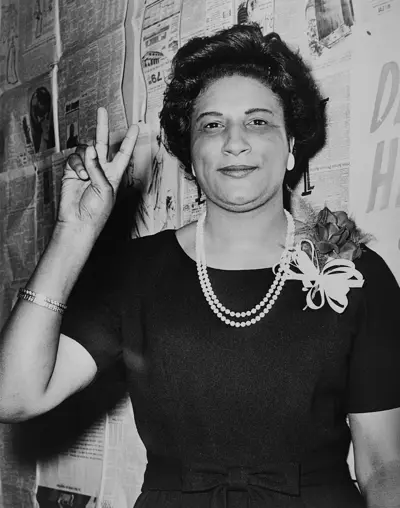
Constance Baker Motley, was a key strategist of the civil rights movement, lawyer, judge, state senator, and Borough President of Manhattan, New York City. She obtained a role with the NAACP Legal Defense and Educational Fund before entering law school as a staff attorney and continued her work with the organization for more than twenty years. She argued 12 landmark civil rights cases in front of the Supreme Court, winning nine. She was a law clerk to Thurgood Marshall, aiding him in the case Brown v. Board of Education. Baker Motley was also the first African-American woman appointed to the federal judiciary, serving as a United States District Judge of the United States District Court for the Southern District of New York. Judge Motley died on September 28, 2005 in New York City of congestive heart failure.
