R. Buckminster Fuller Quotes
Dictators never invent their own opportunities.
Fuller, R. Buckminster. Nine Chains to the Moon. J. B. Lippincott, 1938.

The Priest was the right wing demagogic radio host of his day. Virulently anti-Semitic and anti-Black, he was threatened with excommunication by the Catholic Church, which finally ordered him to cease us weekly radio show and stop the political hate.

FDR was a marvelous judge of men and their character. De Gaulle could not separate himself from France and pushed the French Republic towards one man rule (himself) as much as anyone since Napoleon Bonaparte.

At the time of this statement most people thought that Bush was joking. But by the end of his Presidency many looked back on the quote and thought that Bush had such preferences. He unilaterally took the country into the Iraq War and assumed Presidential Powers that no other president had ever attempted. Most serious, his administration actually took the formal legal position that the President did not have to obey the law if he unilaterally thought that it was not in the nation’s interest from the point of view of the Commander in Chief. So many debate whether this quotation was a light hearted joke of a harbinger of his real feelings about the Presidency.

Lippmann was the most influential pundit of the time. Roosevelt had just been elected but had not yet assumed office. The country was in the midst of the Great Depression and many communities had 80% unemployment. Banks had failed, people were starving, and many people thought that democracy was just not suited to deal with such severe problems. Roosevelt, however rejected the advice and always worked through the Congress and in so doing saved democracy in America.


Porfirio Diaz - the longtime dictator of Mexico stole the election of 1910 and had his opponent Francisco Madero arrested and imprisoned. Madero got out, crossed the border to San Antonio, and issued this declaration which started the Mexican Revolution. See {613620} for the statement that declared the Revolution.


Arguing the need to limit the power of the legislature:


Historically, most dictators have announced their worst intentions and in many cases were not believed by much of the world who then learned that they had made a serious error.

He was then the Chancellor of the Exchequer.


This is the argument—an essence of Fascism—of every dictator from Julius Caesar onward. See {640792} for more of his views on dictators.

This is a very important quotation. It explains in great part, why there have been so few internal revolutions in Muslim countries. Al-Ghazi’s interpretation of Islamic Law and Theology concluded that even if the ruler is incompetent, corrupt, or destructive he should be supported and obeyed by all good Muslim citizens. The reason was that anarchy and/or chaos was an evil much worse for the Islamic community. There was one exception in the case of a ruler who was blasphemous or did not follow Islam. Then it was the duty of good Muslims. Since then, the ruler of an Islamic state, first seeks to ingratiated himself with the clergy. In Saudi Arabia, for example, the Royal Family gives enormous sums to all the clerics. They then urge dissidents and would be revolutionaries to accept the Royal Family with its flaws and shortcomings and accept their lack of freedom and human rights. And they tell all that the King and his family are all religious and support Islam. Therefore any revolt would be a tantamount to a sin. The Christian world had a different technique for inhibiting Revolution. Christian rulers claimed the Devine Right of Kings—that God had selected and ordained the king to lead. Regime change was contrary to the word of God. In a sense, the Islamic approach is more intellectually honest and seems to have worked much better than the Christians who have had so many revolutions. Better that is from the rulers point of view. From a democratic, Jeffersonian point of view revolting against an evil ruler was almost a moral obligation, and Al-Ghazali’s principle is all wrong and is keeping the Muslim countries from reaching democracy.

McClellan thought President Lincoln an oaf and toyed with the idea of taking over. Ironically, he was a terrible battle general and never would have any reasonable success on the battlefield.


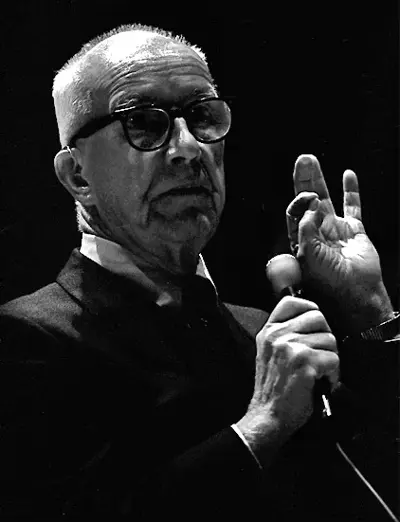
Richard Buckminster Fuller was an American architect, systems theorist, author, designer, inventor, and futurist. He styled his name as R. Buckminster Fuller in his writings, publishing more than 30 books and coining or popularizing such terms as "Spaceship Earth", "Dymaxion" (e.g., Dymaxion house, Dymaxion car, Dymaxion map), "ephemeralization", "synergetics", and "tensegrity".
