Thomas Browne Quotes
Death is the cure for all diseases.
Browne, Thomas. Religio Medici. Andrew Crooke, 1643, p. 147.


He was one of the 3 regents who governed Egypt for the young pharaoh Ptolemy XIII. Rome was in the midst of a civil war with Julius Caesar pitted against Pompey. Rome expected the independent states of the Roman Empire to render aid and assistance to Roman officials who needed same. Pompey with a small fleet and army was being chased by Caesar and arrived at the Egyptian shore demanding assistance. As one of the Roman triumverate, he could take over the Egyptian Kingdom if they let him. And Egypt would be at war with Egypt with Pompey. If they refused him supplies and assistance, Pompey would have later taken it out on Egypt for not honoring their obligation if he defeated Caesar. Theodotus’ famous quotation was accepted by the other two regents. After telling Pompey they would help him, when he landed, the killed and beheaded him. Caesar arrived two days later and Theodotus made the mistake of delivering to Caesar the head and signet ring of Pompey. Caesar was furious. And his dislike of Theodotus and the other two regents, was one of the reasons that he installed Cleopatra, the older sister of Ptolemy XIII as the co-ruler, thus putting Theodotus and the other regents out of a job as Cleopatra was just old enough to rule in her own right and for her brother. The three Regents took the young king and organized an Egyptian attack on Caesar and Cleopatra. Caesar was badly out numbered with only a single Legion. However, with Cleopatra, the two with some loyal Egyptians held out in the Palace until Caesar’s other legions arrived, killed the other two regents and Theodotus just managed to escape and he lived in exile until he was tracked down and murdered in 42 BC. Cleopatra became the most powerful, richest, and best Pharaoh that Egypt had ever had, and her history with Caesar and later Marc Antony are legend.
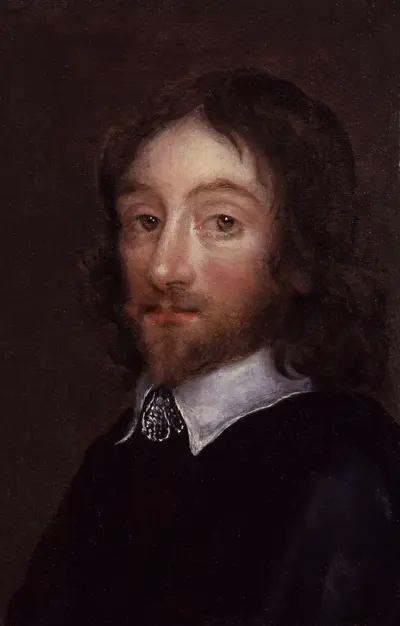
Sir Thomas Browne was an English polymath and author of varied works which reveal his wide learning in diverse fields including science and medicine, religion and the esoteric. His writings display a deep curiosity towards the natural world, influenced by the scientific revolution of Baconian enquiry and are permeated by references to Classical and Biblical sources as well as the idiosyncrasies of his own personality. Although often described as suffused with melancholia, Browne's writings are also characterised by wit and subtle humour, while his literary style is varied, according to genre, resulting in a rich, unique prose which ranges from rough notebook observations to polished Baroque eloquence.
