Aeschylus Quotes
Death is softer by far than tyranny.
Aeschylus. Agamemnon. Translated by Herbert Weir Smyth, Harvard University Press, 1926, line 1365.


Some politicians wrongly think that this is was first an American idea. Spinoza’s ideas were considered so radical and dangerous that he was the only man in history who was excommunicated by the Catholics, the Jews and the Muslims.


Charles I had caused the death of his subjects with impunity and was called to account. However, the English Parliament did not know what specific crime the King had committed. Kings had executed people, guilty of crimes and otherwise, for centuries. For what could a king be accountable. Cooke developed the crime of Tyranny and drew up and presented the indictment for that. The King was found guilty and executed. This was the first time in legal history that a ruler was called to account for crimes committed against his own people. It became the foundation for many trials thereafter including that of Saddam Hussein in 2006.


Japan, then a militaristic power in the East had occupied and controlled Manchuria after the Russo-Japanese War. The League of Nations voted that Manchuria should be placed under international control until elections and independence can be arranged. (See {627074}.) The Japanese then had a rapidly growing population and Japan felt that the Japanese Islands were not sufficient to produce the raw materials, oil and agriculture needed to sustain a larger Japanese population. Therefore, the Japanese argued that they were entitled to grow and expand to nearby territories to provide for their nation’s needs. When the league of nations rejected the Japanese position, Japan walked out of the League of Nations. Japan would occupy part of China and Korea all leading to WWII.


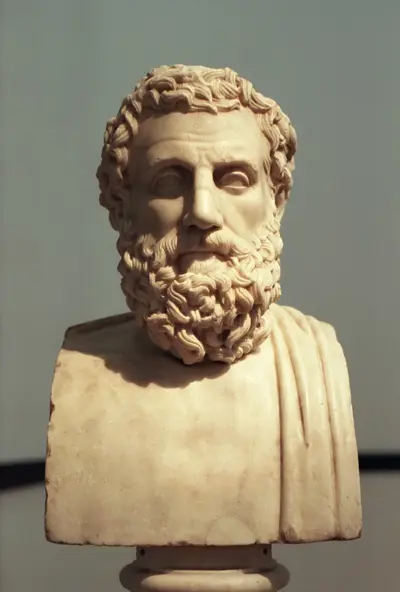
Aeschylus (UK: /ˈiːskɪləs/, US: /ˈɛskɪləs/; Greek: Αἰσχύλος Aiskhylos, pronounced [ai̯s.kʰý.los]; c. 525/524 – c. 456/455 BC) was an ancient Greek author of Greek tragedy, and is often described as the father of tragedy. Academics' knowledge of the genre begins with his work, and understanding of earlier Greek tragedy is largely based on inferences made from reading his surviving plays. According to Aristotle, he expanded the number of characters in the theatre and allowed conflict among them. Before this, characters interacted only with the chorus.
