Charles G. Dawes Quotes
Damn it all, the business of an army is to win the way, not quibble around with a lot of cheap buying. Hell and Marih! We weren't trying to keep a set of books, we were trying to win a war.
Called to testify about improper military spending and sloppy accounting during World War I:
Charles G. Dawes, 1865-1951, U. S. Comptroller of the Currency & Director of U. S. Bureau of the Budget, Brigadier General, Allied Expeditionary Forces, Vice President of the United States (Republican), U. S. Ambassador to Great Britian, Nobel Laureate in Peace, Congressional testimony, February 4, 1921
Sourced by: Eigen's Political and Historical Quotations


Greek invaders were marching on Istanbul


Ruling group of France during the French Revolution. The purchase and transportation of an army in the field was a very expensive element of war and was very difficult as well. The Directory urged its generals to live off the land and get their food from the enemy country they were invading. Rarely did they pay for it but typically just took it from the civilians. Napoleon who served under the directory took this principle one step further. He also stole the invaded country’s art—paintings and statues mostly. These he sent back to Paris where they were sold to rich people. This way he could pay the salaries of the troops and buy more weapons and ammunition. Napoleon could conquer so much territory because France did not have to pay for the military effort as other countries did. This is one of the major reasons for example that the Louvre Museum in Paris has so many great Italian and Spanish paintings.


He lost the vote on this issue, and the Congress created the first committee to investigate and oversee military affairs.

Later, he felt that the offense had become almost invincible. See {626741}. Tesla was one of the great American immigrant scientists. He found in America the kind of intellectual and operational freedom that did not exist in the rigid, monarch-controlled, Austro-Hungarian Empire. He developed patents and techniques that formed the technological bases of radio, telephone long distance, TV, cell phones, Wi Fi, just to name a few. Most important he was Thomas Edison’s great nemesis. Edison invented DC electric generators that could power factories or entire streets in a neighborhood. Tesler invented and developed AC electrical technology which could power entire cities and he could move electricity over long distances which Edison could not. Tesler was one of the first scientists to conceive of and try to implement “Big Science” where there were huge capital investments to develop machines and systems to do what had never been done before—philosophically like the CERN Hadron Collider. Tesler even convinced a large corporation to finance the construction of a massive building and tower so he could experiment with the wireless transmission of electricity. However, as the industrial democracies have learned, Big Science can only be funded by governments and it often takes sever working in consort to afford the huge investment that is required. In Tesler’s era, the federal and state governments did not fund scientific research so his work was not only technically ahead of his time but also conceptually. He anticipated most of the problems and need for a national power grid that was challenging America even at the beginning of the 21st century.


Tojo was a hawk and didn’t want the flawed findings going to other cabinet members.

The General refused. He had already achieved a strategic victory and it was only a matter of time when the Dutch would withdraw on their own as their supply lines were cut off and the populations wanted them out.


Very few societies ever had the wealth accumulated so that they could afford prolonged military operations. In addition, long, prolonged conflicts erode morale, both civilian and military. The Afghanistan War that went on for over a decade caused both and put a great strain on the U. S. national budget.


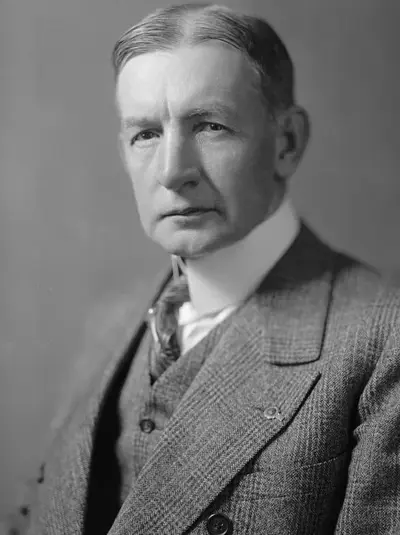
Charles Gates Dawes was an American banker, general, diplomat, composer, and Republican politician who was the 30th vice president of the United States from 1925 to 1929. For his work on the Dawes Plan for World War I reparations, he was a co-recipient of the Nobel Peace Prize in 1925.
