Mark Twain Quotes
Customs do not concern themselves with right or wrong or reason. But they have to be obeyed; one reasons all around them until he is tired, but he must not transgress them, it is sternly forbidden.
Samuel Langhorne Clemens, 1835-1910
Mark Twain, Writer, Founder, Anti-Imperialist League, "The Gorky Incident
Sourced by: Eigen's Political and Historical Quotations


There are fundamentalist Muslim nations and subunits throughout the world, which make it a criminal offense for a women to exercise what, in the West and according to the UN International Charter of Human rights, are her legitimate rights. The punishments in some of these communities are very brutal and barbaric. Under Canadian law and policy a person who is in fear for their safety and/or life because they are exercising a fundamental right are eligible for political asylum and immigration status in Canada. Mayfield and a few other conservative Canadian legislators do not see the issue of women’s required dress as being in the same category of freedom of speech, criticism of the government, or the practice of one’s chosen religion. The same people generally favor more restrictions on immigration anyway, and they would not give Canadian asylum to women so aggrieved. Those legislators seem all to be men. The women in Parliament and the majority of the men do not agree, have maintained the right of women to seek asylum for these reasons.


In 1877 Wasburn was dropped from the List of Ministers by the Unitarian Church. He had become quite atheistic.


Samuel Langhorne Clemens, 1835-1910


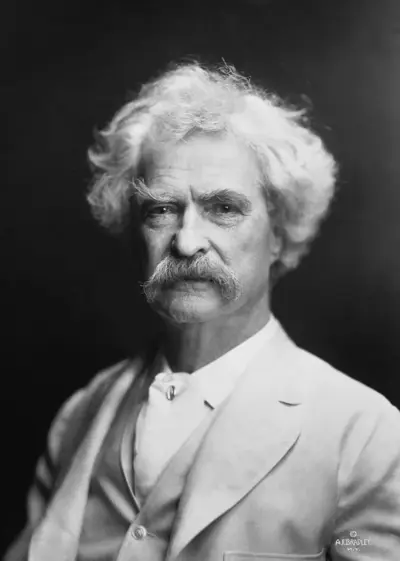
Samuel Langhorne Clemens, known by his pen name Mark Twain, was an American writer, humorist, entrepreneur, publisher, and lecturer. He was lauded as the "greatest humorist the United States has produced," and William Faulkner called him "the father of American literature". His novels include The Adventures of Tom Sawyer (1876) and its sequel, the Adventures of Huckleberry Finn (1884), the latter often called "The Great American Novel".
