Frank B. Kellogg Quotes
Competition in armament, both land and naval, is not only a terrible burden upon the people, but I believe it to be one of the greatest menaces to the peace of the world.
Kellogg, Frank B. "The Renunciation of War." Nobel Lecture, 11 Dec. 1930, Norwegian Nobel Institute, Oslo. Nobel Lectures, Peace 1926-1950, edited by Frederick W. Haberman, Elsevier Publishing Company, 1972.

Hobson, like Mark Twain in America, was a major critic of imperialism.


3rd Earl Russell of Kingston. The military weak nations agreed with him, but the militarily strong ones did not—especially America and England which had the Atomic Bomb when others did not.


Russia announced ballistic missile testing in response to NATO announced deployment of a missile shield across Europe. It was the first mini arms race since the fall of the Soviet Union.

America, England, Germany and France Many Japanese leaders predicted war between the Great Powers while America and its European Allies did not see the danger as clearly. Shortly after 1936, Hitler began the Second World War. Japan was indeed prepared. Hiranuma became one of the Japanese extremists and after WWII was convicted of war crimes and given a life sentence.


Andrew Carnegie was then President of the New York Peace Society.


When the United Nations partitioned Palestine into separate Jewish and Muslim states, the armies of all the Arab countries attacked the new nation which did not even have a formal Army. The Israelis were able to win the war.

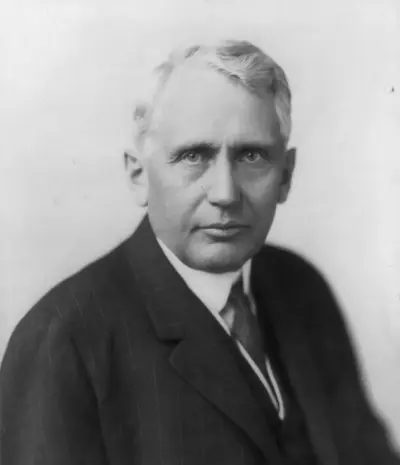
Frank Billings Kellogg was an American lawyer, politician, and statesman who served in the U.S. Senate and as U.S. Secretary of State. He co-authored the Kellogg–Briand Pact, for which he was awarded the Nobel Peace Prize in 1929.
