Frank Herbert Quotes
But it's well known that repression makes a religion flourish.
Herbert, Frank. Dune. Chilton Books, 1965.


This is the kind of search and seizure to determine who was practicing which religion with which out Founding Fathers were very much aware and which were eliminated in the Bill of Rights.


What oven gets overlooked in the history leading up to the Civil War was the terribly repressive atmosphere that developed in the South itself over the issue of slavery. There were some abolitionists in the South, and most of the slaves were held by a relatively few wealthy men. Many with no slaves or only one or two, might go either way on the slavery issue and the various fugitive slave laws. And Northern abolitionists sometimes would come South to investigate and report on the conditions of the slaves of the South. While still in the Union, many Southern areas made a mockery of the Constitutional protections of freedom of speech, freedom of the press. Censorship and repressive activities invaded privacy, and the South, for both Northerners and English travelers, no longer had the charm of the past. Note the use of the term “reign of terror”. Bunch was a seasoned diplomat experienced at reporting on conditions.


James was a Catholic King and did not like Protestants but positively detested Puritans. He made good his and “harried them out of the land” much to the benefit of the American colonies to which they immigrated and the detriment of England. Many of the immigrants to America came for the religious freedom, but in the early days, no sooner did they arrive and become the majority, than they began to discriminate against other religions.


Islam had been the center of intellectual thought in the world, until the clerics had decided that innovation itself was a sin and one that called for the death penalty. Although most non-Muslim religions went through stages of death for religious dissent. However, the Koran deals with every part of society. There is no separation of church and state. All knowledge is in the Koran the fundamentalist believes and anyone who expresses a new idea is not only wrong and a heretic, but is dangerous and must be executed. It is therefore not very surprising that the Islamic contributions to science, medicine, and the arts has been so small. The Islamic fundamentalists are opposed by Muslim modernists who try to change the Islamic culture but they are on the minority. Most religions have gone through bad earlier periods where dissent was heresy and warranted death. Fundamentalist Islam is the only one which bans original thought of any kinds even it does not contradict established doctrine.

The “burning” is a reference to the range of murders from the burning of heretics in the Middle Ages to the crematorium ovens of the German Concentration Camps in the Holocaust of WWII.


Hamilton had studied with Martin Luther at Wittenberg and returned to Scotland where he converted many from the Catholic Church. He was offered a chance to recant and spare his life but he refused. He became the first Protestant Martyr in Scotland and his death brought many new converts.

This is a particularly interesting historical quotation because it succinctly gives a history of the various horrors of religious strife in British history—a history that was very well known to the American Founding Fathers and the general American Colonial population. This history was the major driver behind the public insistence for the Bill of Rights and the 1st Amendment which erected a wall of separation between church and state with government never favoring or abetting any particular religion.

Singh is a Sikh cleric. Sikhs are the third largest religious group in India.

Quintus Septimius Florens Tertullianus


From the latter part of the 20th century onward, religious nationalism was no longer a force for most religions and nations except Muslim countries. It was the only religion left where a large proportion of the adherents saw no distinction between the religion and the government. Nations that had separation of church and state were not conducive to the extreme fundamentalist form of Islam where the Secular Leader and the Religious leader was to be embodied as a single person. As a result Islamic religious nationalists argued for a Theocracy and at times fought for it with violent means. The secular government typically, to curtail the violence and prevent a religious takeover, often outlawed the extreme religious Islamic parties. While Aslan cites the Muslim Brotherhood failure in Egypt as a desirable outcome, the only way the other forces of Egyptian society could prevent the Islamists from taking over turning the country into a theocracy was to forcefully repress the extremists. The Turkish outcome was much better, but there was the threat of repression of the Justice and Development Party when it won a majority control of the government. There were explicit threats that if it tried to weaken the secular nature of the government as Ataturk had formulated it, the military would come “out of the barracks” and oust the government as they had done before. There were nations like China which persecuted religions such as certain forms of Christianity, but those religions were not fighting for religious nationalism. They only wished the freedom to practice their religion and had no program or theology that argued for Christianizing the government. The Tamil Hindus of Sri Lanka did not want a Hindu government and were perfectly free to practice their religion. The problem was that they felt that there was systemic social and economic discrimination against the Tamils and they fought for independence—not of a Hindu state, but of a secular, nondiscriminatory state of equal opportunity.


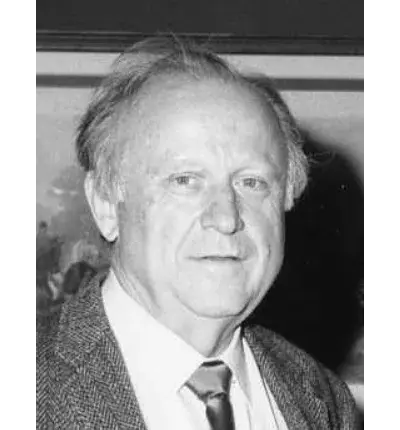
Franklin Patrick Herbert Jr. was an American science-fiction author best known for the 1965 novel Dune and its five sequels. Though he became famous for his novels, he also wrote short stories and worked as a newspaper journalist, photographer, book reviewer, ecological consultant, and lecturer.
