Melvyn P. Leffler Quotes
Bush, Cheney and Rumsfeld did not invent preemptive and preventive wars; they have a long history in U. S. foreign policy.
Melvyn P. Leffler, Historian, 9/11 in Retrospect, Foreign Policy, September / October 2011
Sourced by: Eigen's Political and Historical Quotations

He served Presidents Reagan, Clinton, and both Bushes
Podharetz was citing the Vietnam war. The two American occasions where the plausibility seemed to fade were the Vietnam War and The Irag war. Both Presidents Lyndon Baines Johnson and George W. Bush as Bismarck predicted, had much political trouble over the wars.


This quotation is a good example of how tolerant some nations can be in terms of maintaining diplomatic relations and trade relations with other countries. The American and English governments chose to simply protest and condemn the slanderous statement but decided that the Prime Minister was pandering to his political local Islamic base, so took no further action and kept open diplomatic relations. Mahathir had a history of being very accusatory of the West with respect to anything that affected the Arab Muslims. The number of Muslims killed by the Americans and British in the Iraq War was very small compared to the huge number of Muslims killed by other Muslims in their Sunni Shiite civil war. While Bush and Blair both generated support for the Iraq invasion by making claims of WMD development in Iraq that were false, it is not clear whether or not they knew their statements were false, should have known that they were false, created an atmosphere against Iraq that was likely to produce false accusations, or were simple misled by poor intelligence. Mahathir, of course, chose to assume the worst case, and claim it was true, which is what many people think Bush and Blair did in analyzing the intelligence on Iraq.

Kennen, one of the great American wise men for foreign affairs, could not have predicted the outcome of the Iraq war any better.

Although Great Britain had abolished slavery, British economic interests during the Civil War suffered because of the northern blockade of the South. Much political opinion in England was hostile to the blockade policies of the Union. Bright, a great admirer and supporter of the United Sates and the Union cause was concerned that the United States might drift into War with Great Britain. His letter to Senator Sumner was written with the understanding that it would be in shared with President Lincoln, and it was actually read at a cabinet meeting.


It certainly did.


The “surge” was the short term injection of a large number of American combat troops into Iraq when the Iraq War was going badly. President George W. Bush, who at the urging of Vice President Cheney and the neoconservatives had invaded Iraq and while the invasion went well the administration botched the so-called peace and America was in the midst of a Iraqi civil war. Bush went ahead with the surge despite the advice of the Joint Chiefs. What makes the quotation particularly interesting, beyond the fact that the senior military advice was ignored, was that the President had always campaigned on the principle that the President should listen to the senior American Military officials on military tactics and strategy. He like Franklin Roosevelt, Harry Truman, Dwight Eisenhower, John F. Kennedy, and other presidents found that the military leadership perspective was often very narrow and not even militarily infallible. The Iraq War turned in our favor after the surge albeit that there have been arguments since then as to whether or not the surge was the reason or was it due to other factors which occurred at the same time. Probably, all were factors.


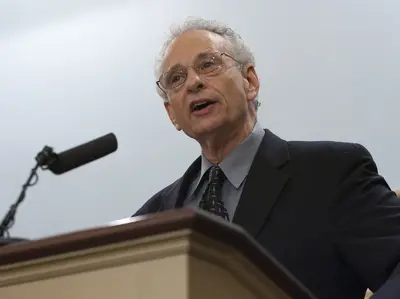
Melvyn Paul Leffler is an American historian and educator, currently Edward Stettinius Professor of History at the University of Virginia. He is the winner of numerous awards, including the Bancroft Prize for his book A Preponderance of Power: National Security, the Truman Administration and the Cold War, and the American Historical Association’s George Louis Beer Prize for his book For the Soul of Mankind: The United States, the Soviet Union, and the Cold War.
