Abram Stevens Hewitt Quotes
Bring back that better era of the republic in which, when men consecrated themselves to the public service, they utterly abnegated all selfish purposes.
Abram Stevens Hewitt, 1882-1903, U.S. Congressman (Democrat, NY), Mayor of New York City, Chairman, Democratic National Committee, Speech, U. S. House of Representatives, May 25, 1876
Sourced by: Eigen's Political and Historical Quotations


See Charles James Fox, John Milton, Jeremy Bentham, George Mason, Grover Cleveland, Benjamin Disraeli and Woodrow Wilson for similar expressions of this idea.

Discussing alleged meager compensation for public service:

The Treasury Secretary had discovered a massive fraud between some whiskey distillers and some government officials whereby the government was defrauded of millions of dollars of tax revenue. One of the Federal officials Bristow wanted to indict was O. E. Babcock, the President’s personal secretary and advisor. Bristow marshaled the facts and sent a report to Grant who wrote the quoted material in the margin of the report and sent it back to Bristow. Despite Grant’s lack of personal involvement and his immediate willingness to prosecute his close friend and colleague, the stain of scandal spread to Grant and to this day is a part of any discussion of his presidency.

“Public charities” were government services that were like those provided by private charities: relief, food, housing etc. ie “welfare”

See Charles James Fox, John Milton, Jeremy Bentham, George Mason, Grover Cleveland and Woodrow Wilson for similar expressions of this idea.


The Society of Cincinnati was formed just after the Revolutionary War by officers of the army, to perpetuate friendships, to aid each other and the widows and orphans of members, and to honor their French allies and comrades:


The hearings were on indecency in broadcasting.


The first non-PRI President in over 70 years. Before Fox, the corruption of Mexican Presidents was rampant.

He had been attacked by the extremists in his own party for serving as the Ambassador to China during a Democratic administration. Huntsman, fluent in Chinese and very familiar with Chinese culture, was a very successful Governor and was recognized by President Obama as being uniquely qualified and as a Patriot he made this great statement about service to country


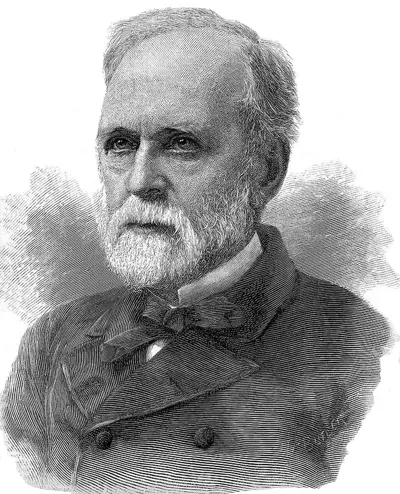
Abram Stevens Hewitt was an American teacher, lawyer, an iron manufacturer, chairman of the Democratic National Committee from 1876 to 1877, U.S. Congressman, and a mayor of New York City. He was the son-in-law of Peter Cooper (1791–1883), an industrialist, inventor and philanthropist. He is best known for his work with the Cooper Union, which he aided Peter Cooper in founding in 1859, and for planning the financing and construction of the first subway line of the New York City Subway, for which he is considered the "Father of the New York City Subway System".
