Keshub Chunder Sen Quotes
Bombay is far ahead of Bengal in the matter of female education. I have visited some of the best schools in Bengal and Bombay, and I can say from my own experience that there are a larger number of girls receiving public education in Bombay than in Bengal; but while Bengal has not come up to Bombay as far as regarded extent of education, Bengal is not behind Bombay in the matter of solidarity and depth.
Sen, Keshub Chunder. Keshub Chunder Sen's English Visit. Edited by Sophia Dobson Collet, Strahan & Co., 1871.


There are two things that make this quotation interesting, First it tells us about the educational gender discrimination in early Massachusetts. But not his phrase “light soon broke in”. He obviously saw the lack of education for girls as undesirable and unenlightened. But the fact that he had this attitude and would express is so readily in 1857 tells us that, at least in the Northeast girls’ education was assumed by many as part of civilized society.
Public schools were a radical idea at the time, but public schools for girls is astounding, especially coming from the clergy. This Cahier was the consensus of the Clergy of Blois in 1789. There were cahiers of several provinces of France—some by the clergy, some by the nobles. What is fascinating is the emergence of many of the pre-Revolutionary French concepts. The example of the American revolution and its principles was known throughout the educated classes of France.


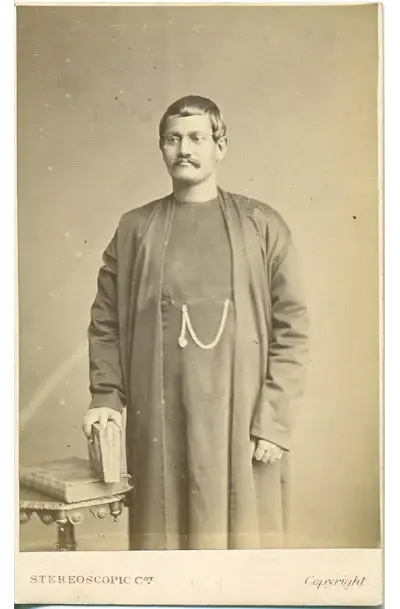
Keshub Chandra Sen was a Hindu philosopher and social reformer who attempted to incorporate Christian theology within the framework of Hindu thought. Born a Hindu in the Bengal Presidency of British India, he became a member of the Brahmo Samaj in 1857 but established his own breakaway "Bharatvarshiya Brahmo Samaj" in 1866 while the Brahmo Samaj remained under the leadership of Debendranath Tagore (who headed the Brahmo Samaj till his death in 1905). In 1878 his followers abandoned him after the underage child marriage of his daughter which exposed his campaign against child marriage as hollow. Later in his life he came under the influence of Ramakrishna and founded a syncretic "New Dispensation" inspired by Christianity, and Vaishnav bhakti, and Hindu practices.
