Aeschylus Quotes
Black smoke, the flickering sister of fire.
Aeschylus. The Seven Against Thebes. Translated by Herbert Weir Smyth, Harvard University Press, 1922, line 494.

At first reading, this is just a common report of a German war correspondent riding along on a bombing mission. However what makes it a very important historical quotation is the description of the fires and the date. In WWII the allies firebombed Hamburg {624722} and Dresden, and were then accused by the Germans—and by some historical revisionists in the 21st century—of bombing civilian cities and using the firbombing technique where one huge conflagrant sucked the air out of the area and roasted even people in bomb shelters. However, it was clear that the Germans had started the bombing of civilian cities, but the firebombing was less clear. This quotation proves that it was the Germans who first broke the rules of war and that made the subsequent Allied use of the technique legal and for most people then moral.


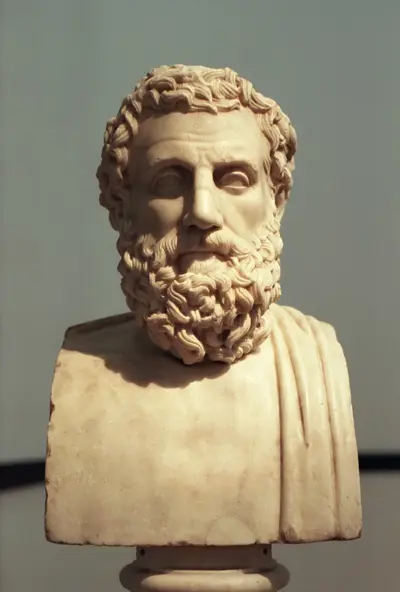
Aeschylus (UK: /ˈiːskɪləs/, US: /ˈɛskɪləs/; Greek: Αἰσχύλος Aiskhylos, pronounced [ai̯s.kʰý.los]; c. 525/524 – c. 456/455 BC) was an ancient Greek author of Greek tragedy, and is often described as the father of tragedy. Academics' knowledge of the genre begins with his work, and understanding of earlier Greek tragedy is largely based on inferences made from reading his surviving plays. According to Aristotle, he expanded the number of characters in the theatre and allowed conflict among them. Before this, characters interacted only with the chorus.
