Vandana Shiva Quotes
Biopiracy (is) biological theft; illegal collection of indigenous plants by corporations who patent them for their own use.
Shiva, Vandana. Biopiracy: The Plunder of Nature and Knowledge. South End Press, 1997, p. 5.


Tonga has 100,000 people who have been relatively isolated for centuries and hence have a more uniform gene pool than most parts of the world. As such it makes a wonderful resource to identify the causes of many diseases including and especially those that are more prevalent amongst Tongalese. In the early 21st century, an Australian genetic engineering company, had entered into an agreement with the Tonga Health Ministry to conduct studies. Tonga, a monarchy with the King all powerful, had a small democracy movement, who objected to the entire form of government, and was particularly incensed that the Government would make such an arrangement with no public debate or national discussion. Many years ago, Australian interests have came to Tonga and traded for Sandlewood—at what some critics saw as “giveaway” prices.

This principle justified the Government in allowing a local Indonesian company to manufacture anti-AIDS drugs without paying licensing rates demanded by the drug companies that held the patents. The principle is that patent rights and the desire to profit should not supersede the rights of people to continue to live because they cannot afford the drugs to keep them alive. The local manufacturers provide the drugs to the government at cost of manufacture which is a tiny proportion of the price the patent owner charges.

Industrial spying and trade secret thefts are very common in the South Korean business culture. Bribery of competitor’s employees is common. In the pre WWII period of Japanese control, the Japanese had a policy of keeping Korea technically backward to produce food cheaply and trade the food to Japan and buy manufactured goods from Japan—a classic colonial strategy. Japanese engineers and other technicians would go to Korea set up facilities but never share their knowledge with the Koreans. If technicians were needed, they would have to come from Japan. None the less there is a cultural blindness and Korean firms will commonly steal technology from anyone—partners or others. The South Korean Governments had looked at this with a blind eye. Many Koreans believe that because of past history the only way that they can survive on world competition is to continue to pilfer technology. However, modern South Korea has excellent technicians and scientists in almost all fields and making the cultural shift to a standard that is more consonant with the majority of the industrial democracies is the great challenge.


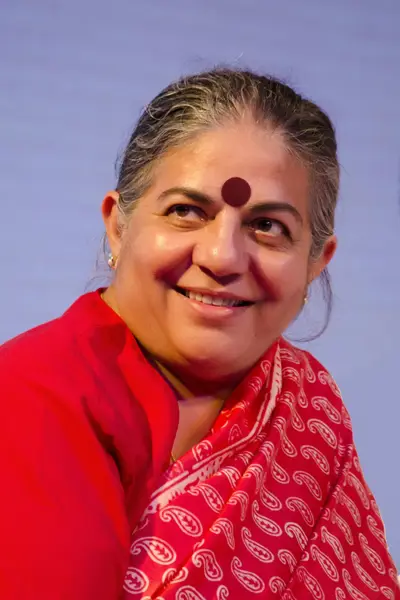
Vandana Shiva is an Indian scholar, environmental activist, food sovereignty advocate, ecofeminist and anti-globalization author. Based in Delhi, Shiva has written more than 20 books. She is often referred as "Gandhi of grain" for her activism associated with anti-GMO movement.
