Peter Drucker Quotes
Big companies have no future …. There are no more advantages to big business. There are only disadvantages.
Peter Drucker, Management Expert, Interview, Wired 1996
Sourced by: Eigen's Political and Historical Quotations


This is radically different from most other Chinese corporations and most American or other country corporations for that matter who seek as much government business as they can get. Alibaba—the largest e-commerce company in the world, larger than Amazon.com and eBay put together--had hundreds of millions of on-line Chinese buyers and hundreds of thousands of Chinese retailers. A huge proportion of Chinese retail sales go through Alibaba.

The President and his new appointee were half joking but many of the large corporations were attacking the new department and its head frequently. The extreme conservatives used the technique of personally discrediting the head of the agency to discredit the agency and its activities. The President himself was so popular that they did not dare attack him.

The issue was still not decided by the beginning of the 21st Century except that a certain amount of public disclosure was required if the company raised funds by selling stock to the public, but there were some giant corporations that were private and exercised huge power and influence and yet whose operations were secret.

The principle holds for politics also. The largest social problems the politician faces are the greatest opportunity for him/her to create a program to solve or ameliorate the problem.

While this statement seems totally absurd to us today, at the time most politicians and judges believed it. Only the left wingers and the populists opposed the doctrine as well as most business owners who knew the truth but of course most preferred the have their own monopoly. One of the reasons the large American corporations did not want Jewish and Chinese immigrants is that those cultures supported highly competitive businesses and might give consumers a better deal or worse, their culture would argue for less monopoly and more competition. For more than half a century AT&T was given a monopoly over almost all telephone service in the United States. Finally the Federal Courts saw through the company propaganda, and ordered AT&T broken up. The “Baby Bells” have persuaded most state legislatures and regulatory bodies of this same argument, and almost every community of the United States has a monopoly on local wired local telephone service. The same is true about water and electricity and a great deal of American transportation. Every major company strives for as much of a monopolistic position the government will allow; some are overt like the electrical companies. Others are more subtle and use copyright and patents to be sure that there is no price or service competition. Fortunately, the high tech industry is to technologically competitive that prices have been have been going down constantly not like telephone and Internet connectivity, entertainment, education, and professional services.


Here, an officer of a large corporation (Pittsburgh Plate Glass) makes the classic argument of large corporations about the anti-trust laws which prevent them from using their economic power to crush competition. The claim that the large corporations are at a disadvantage and handicapped in competing with small companies is easily refuted by the bankruptcy rate of small businesses which is large, and that of large corporations which is very small, and that of major monopolies which is virtually zero.

See {641989} & {641989} for more on the Radio Channel corrupt giveaway.


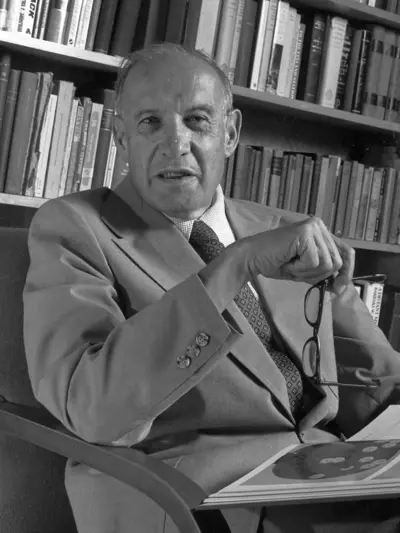
Peter Ferdinand Drucker was an Austrian management consultant, educator, and author, whose writings contributed to the philosophical and practical foundations of the modern business corporation. He was also a leader in the development of management education, he invented the concept known as management by objectives and self-control, and he has been described as "the founder of modern management".
