Margaret Atwood Quotes
Before the Civil War, Canada was at the top of the underground railroad. If you made it into Canada, you were safe unless someone came and hauled you back. That was also true during the Vietnam War for draft resisters.
Atwood, Margaret. "Haunted by The Handmaid's Tale." The Guardian, 20 Jan. 2012.

This is a fascinating quotation of the then leader of the Mormons. Historically, it shows us that many from the North, primarily to avoid the military draft of the Civil War, left their homes and emigrated to California, Washington and Oregon. In doing so, many passed through Salt Lake City and many became Mormons and stayed. These “Copperheads” included a serious peace movement at the time along with racists who didn’t want to risk their lives over the issue of slavery. Next we see the affinity that the Mormons had for the Copperheads. Actually, although the Mormons did not own slaves the church leadership had not been, well before the civil war, opposed to slavery and some were supportive of the institution. See {629157} and {629154}. Note the hostility that Young had for Abolitionists. At that time, a large proportion of the Abolitionists were religious Protestant laymen and laywomen and ministers. They were very outspoken and used writing and the media of the time to make their case. In almost all cases they also opposed polygamy and from a sexual morality point of view, saw it as little different from the slave owners sexual exploitation of his female slaves. Moreso than any other issue, polygamy was damaging the Mormon image amongst other Americans, It was the Abolitionists who were principle drivers of this negative image problem of the Mormons, So Young resented these “busybodies” and empathized with the Southerners not because he personally favored slavery, but they were both “victims” of the same set of do gooders. Young had a very limited narrow view of the rest of the country, and completely overestimated the prospects of the Southern Rebels.


While this assessment was true up until the 1980s. By the 21st century there were almost no serious historians who thought that the motivation of the Confederate States for the Civil War was anything but slavery and the economic impact that abolition might bring. However, one of your advantages having this collection of historical quotations is that you can see for yourself why the Southern states say they were seceding. This following are four of the official secession resolution documents. Read these and you will see that all the claims that there were other major reasons for secession are just attempts to make the Confederacy a little less brutal and greedy. See {621371}, {619793}, {621372}, {621375}

This quotation sheds light on an embarrassing aspect of corruption in the Union Army during the Civil War. Captain Wilder was as his official title denotes, the officer on his military base in charge of slaves who had escaped and crossed over the Union Lines. Escaped slaves were officially called “Contrabands.” He had over 10,000 in his charge. There had been an official order issued by the General of the Army that prohibited the military from returning slaves to their owners. See {619337}. However, the Southern owners of the escaped slaves would cross the Union lines, go onto the Union military base, identify their former slaves, at Fort Monroe, and bribe Union soldiers to in effect kidnap the former slaves and forcibly return them to their former masters. Then, often using bribery, the masters would smuggle their former slaves back across the lines and return to their plantation where the escapees were physically punished and put back to work. While some Union military commanders would not allow this, others thought the action just and was a good way for the men to pick up some extra money. The photo was taken in the Captain’s district showing the runaway slaves in work details for the army.

The issue is whether Kansas would enter the Union as a slave state of a free state. If a free state, the free states would be able to block further slavery. If Kansas were to become a slave state, the slave states would have a sufficient majority to make all future expansion hospitable to slavery. The slavery forces started sending men and families into Kansas so that they could vote; the abolitionists did the same. Both sides armed and a war began with each faction trying to kill or drive the other faction out of Kansas before the vote. See {612516} for the anti-slavery perspective.

It is not only in modern times that there were “litmus tests” for appointees. Franklin Pierce had been elected as a Democrat with a coalition that included Southerners who were able to dominate the weak Pierce precluding abolitionists from any appointments.

3rd Viscount Palmerston

I should sooner remain in Southern bondage than avail myself of the opportunity of Northern freedom.
Hughes was a strong critic of the exploitation of laborers in the North by what he called the “bloated capitalist” First Irish Bishop in the United States

This is an important quotation because it helps to dispel a myth that the Civil War was not about slavery. That was the reason that the rebelling states gave for secession, but apologists for the Confederacy have claimed that the average soldier on both sides did not care about slavery. (Two thirds of the Southern Soldiers came from families that did not own slaves; nonetheless it was clear that the main motivation of the Confederate Soldier was to protect the institution of slavery, while that of the Union soldiers was to destroy slavery.) Professor Manning found this in her book: What This Cruel War Was Over: Soldiers, Slavery, and the Civil War.

At this point, there had hardly been any fighting and no outrages or war crimes were yet committed by either side. These would come later—more on the Confederate side as they did not want to take the limited resources they had from their troops to fulfil abstract obligations to prisoners of war or to civilians. A few deliberately chose to use terror tactics. The Union troops also at various points in the war got out of hand and looted personal property of civilians. But at this point, this proclamation was just lies and propaganda.

This is surprising to most people who believed the the Vietnam War draft resistance was the first in American History and an aberation. Actually, there have been active draft resistance in America as long as there has been military conscription.


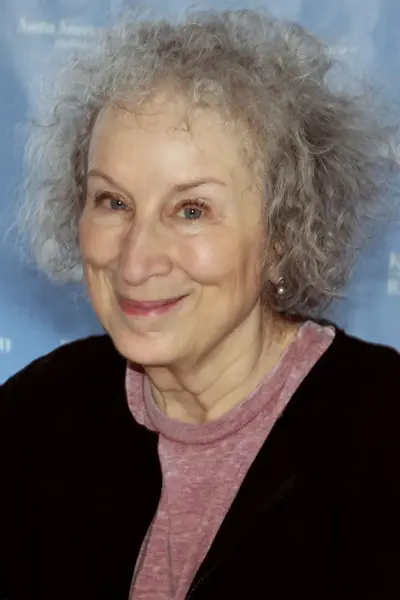
Margaret Eleanor Atwood CC OOnt CH FRSC is a Canadian poet, novelist, literary critic, essayist, teacher, environmental activist, and inventor. Since 1961, she has published 18 books of poetry, 18 novels, 11 books of non-fiction, nine collections of short fiction, eight children's books, and two graphic novels, as well as a number of small press editions of both poetry and fiction. Atwood has won numerous awards and honors for her writing, including the Booker Prize (twice), Arthur C. Clarke Award, Governor General's Award, Franz Kafka Prize, Princess of Asturias Awards, and the National Book Critics and PEN Center USA Lifetime Achievement Awards. A number of her works have been adapted for film and television.
