Khmer Rouge Quotes
Be humble; draw experience from the masses; be linked with the stance of the masses; and be close to the masses.
Cambodian Khmer Rouge Slogan, 1970s
Sourced by: Eigen's Political and Historical Quotations

What is fascinating about his perception of governance is that if this quotation were viewed in isolation, one might conclude that Khamenei was a populist whose political views do not differ much from those of Thomas Jefferson. But then Islam enters the picture. His belief is that the Koran and the word of the Prophet trumps everything else including the people. So he has little trouble passing laws or enacting regulations that are opposed by the vast majority of Iranians. In a Presidential and parliamentary election, the candidates most popular were disqualified by Khamenei on the grounds that they were not sufficiently consonant with his interpretation of Islam. So in reality his personal view of Islam comes first and secondary to that is the will of the people.

The slogan was used from ~1935-1959


The word “smashing” is a literal translation from the Khmer language. It is not used in the metaphorical sense as we are used to. To save money, arms, bullets and resources the Khmer Rouge method of execution was to “smash” the victim’s head in with a shovel or other implement. This slogan told people literally to murder their political enemies in this brutal way.


What makes this quotation so noteworthy is that it not only demonstrates good leadership in a poor country, but it is one of the very few examples of poor countries where the leaders have given up their own creature comforts, conveniences, perks and status symbols.

The irony of this quotation is that most North Koreans were conditioned to regard him as a God. There was no place in the world here people had more reverence for a leader—and in this case a brutal, dictatorial, leader.


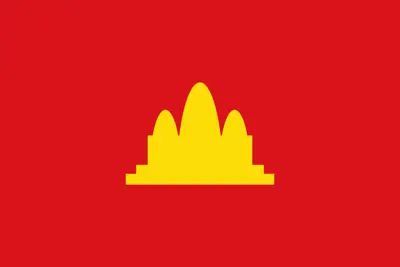
The Khmer Rouge (/kəˌmɛər ˈruːʒ/, French: [kmɛʁ ʁuʒ]; Khmer: ខ្មែរក្រហម, Khmêkrâhâm [kʰmae krɑˈhɑːm]; "Red Khmers") is the name that was popularly given to members of the Communist Party of Kampuchea (CPK) and by extension to the regime through which the CPK ruled Cambodia between 1975 and 1979. The name was coined in the 1960s by Norodom Sihanouk to describe his country's heterogeneous, communist-led dissidents, with whom he allied after his 1970 overthrow.
